|
Playing with Multibase Maths Manipulatives
© Beverley Paine
When my children were younger and we used to enjoy playing 'school at home' I seemed forever hungry for teaching aids, preferably those manufactured for classroom use. Just owning these items made me feel validated as a homeschool educator of children! I mean, you can't play teacher without the right props, can you?
Having spent an awful lot of money on these wonderful props meant I needed to put time into actually using them... More often than not the instructions came separately, usually expensively. Naively, I thought I could do without these fancy books, and come up with interesting ways to use the materials without them. After all, some of the things I bought I'd used in school as a student myself. It couldn't be too hard, could it?
As a student I loved playing with the wooden coloured rods and unit and plain wooden multibase sets, with the tiny cubes, longs, flats and giant cubes, all smelly richly of fresh timber and feeling so nice in my small hands. I think the sensorial aspect of it all was the key - perhaps it was touching rather than reading and writing that entranced me - a delightful change from the daily embarrassment of mental maths or drudgery of filling page after page with times tables...
Without the pages of sums to work from, though, I found it difficult to integrate these same maths manipulatives into our homeschooling life. A friend introduced me to Montessori teaching method. This book filled the gap - replacing the book I hadn't thought to buy in the first place. I didn't use the methods prescribed there, but I did borrow the concept of the cards they used with their own multibase set. Over a number of hours I carefully cut out cards that fit nicely over each other - units, tens, hundreds and thousands, so that using overlays I could make up any number. I used a separate colour for each. Tens were blue, thousands red, and so on (actually these colours were taken from the Mortensen maths manipulative set, a more upbeat, expensive number teaching aid that goes much further than place value. Mortensen originated his ideas and manipulatives from his Montessori teaching experience).
Armed with my classroom set of M.A.B. blocks, fortified with my two Cuisenairre sets, and my homemade set of number cards, and pages of sums ready to be solved, my children and I were ready to play school at home. But it never really worked like that. The children were reluctant to turn from the page of sums to be finished quickly 'so I can go out and play' to work out the problem using the wooden blocks... they'd rather watch my face and guess the answer, the same way learning happens in classrooms...
Finally I gave up 'teaching' using the manipulatives, and began playing with them. We built towns, more like cities, with skyscrapers and Brio railways weaving in and out, under shopping centres, down to the harbour, where the wooden ferry moved matchbox cars to the new side of town, steadily being built ... 'we need a factory 2345 units big'... 'I need some flats, four flats, can I exchange this one thousand cube'...
Sometimes I'd hand over a number using the cards and the children would build, demonstrating some amazing skills with symmetrical design in the process. I'd always be the 'bank' of building materials, happily exchanging, using correct terminology, encouraging them to use numbers, helping them work out place value.
We'd build really tall towers, just to see how high we could get without falling over... 484 is a great height for a tower, what about 2998? 10,677?
Eventually we learned to use the cards to make up sums and then solve them using the manipulatives, but only after we'd played with the materials, after hours of role-playing games with the children's toys. After we'd taken the school out of the units, flats, longs and cubes and put the home in its place...
I don't really know what the children got out of the manipulatives... we only used them rarely, maybe four or five times a year for about three years. But we still own them. Thomas, now 13 years, has finally agreed to let them pass to another family. He's keeping the wooden 'solids' set though, and a few other unused manipulatives. There's something nostalgic about them - the smell, the way they feel, perhaps? The plastic 100 number tray and tiles we'll be keeping forever though, along with the 100 tiddly winks we used to counting - they are too useful for poker chips!

Was this article helpful? Was it worth $1.00 to you?
Your gift of $1 or more helps to keep this site operating
offering encouragement
and reassurance to families
wanting
better outcomes for their children.
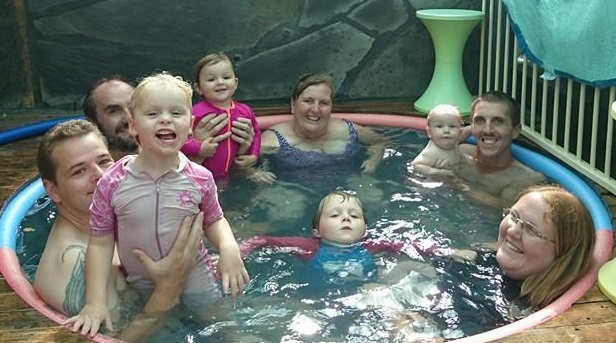
Beverley Paine with her children, and their home educated children, relaxing at home.
Together with the support of my family, my aim is to help parents educate their children in stress-free, nurturing environments. In addition to building and maintaing this website, I continue to create and manage local and national home educating networks, help to organise conferences and camps, as well as write for, edit and produce newsletters, resource directories and magazines. I am an active supporter of national, state, regional and local home education groups.
"You've been an inspiration to me, I love the way
you really listen to people." Vanessa
"Whenever I read your writing I always come away
with increased confidence in my ability to provide and
share a wonderful learning journey with my family!" Davina
"Your guidance, understanding, support and words of
wisdom changed our lives. We now offer support and
organise many homeschooling events for others." Lesley
"Thank you once again for your prompt and friendly service.
I am convinced that your books are going to add
quality and peace of mind to my journey of teaching my kids
at home! Just from studying your website, until almost
2am
in the morning, I 've been encouraged!" Louisa
"Thank you for all your many,many reassuring words
over many, many years. You probably don't know exactly how
valuable you are to the Australian Home Education community.
I've been reading your stuff for maybe 8 years or more now.
And I'm very grateful." Gythaa

CLICK HERE
if you want to learn
how to write your own education plans
to suit
your unique children's
individual learning needs?
Or you are looking for quality curriculum and teaching tips...
|
|
Welcome to the World of Home Education
and Learning without School!
We began educating our children in 1985, when our eldest was five. In truth, we had helped them learn what they need to learn since they were born. I am a passionate advocate of allowing children to learn unhindered by unnecessary stress and competition, meeting developmental needs in ways that suit their individual learning styles and preferences. Ours was a homeschooling, unschooling and natural learning family! There are hundreds of articles on this site to help you build confidence as a home educating family. We hope that your home educating adventure is as satisfying as ours was! Beverley Paine
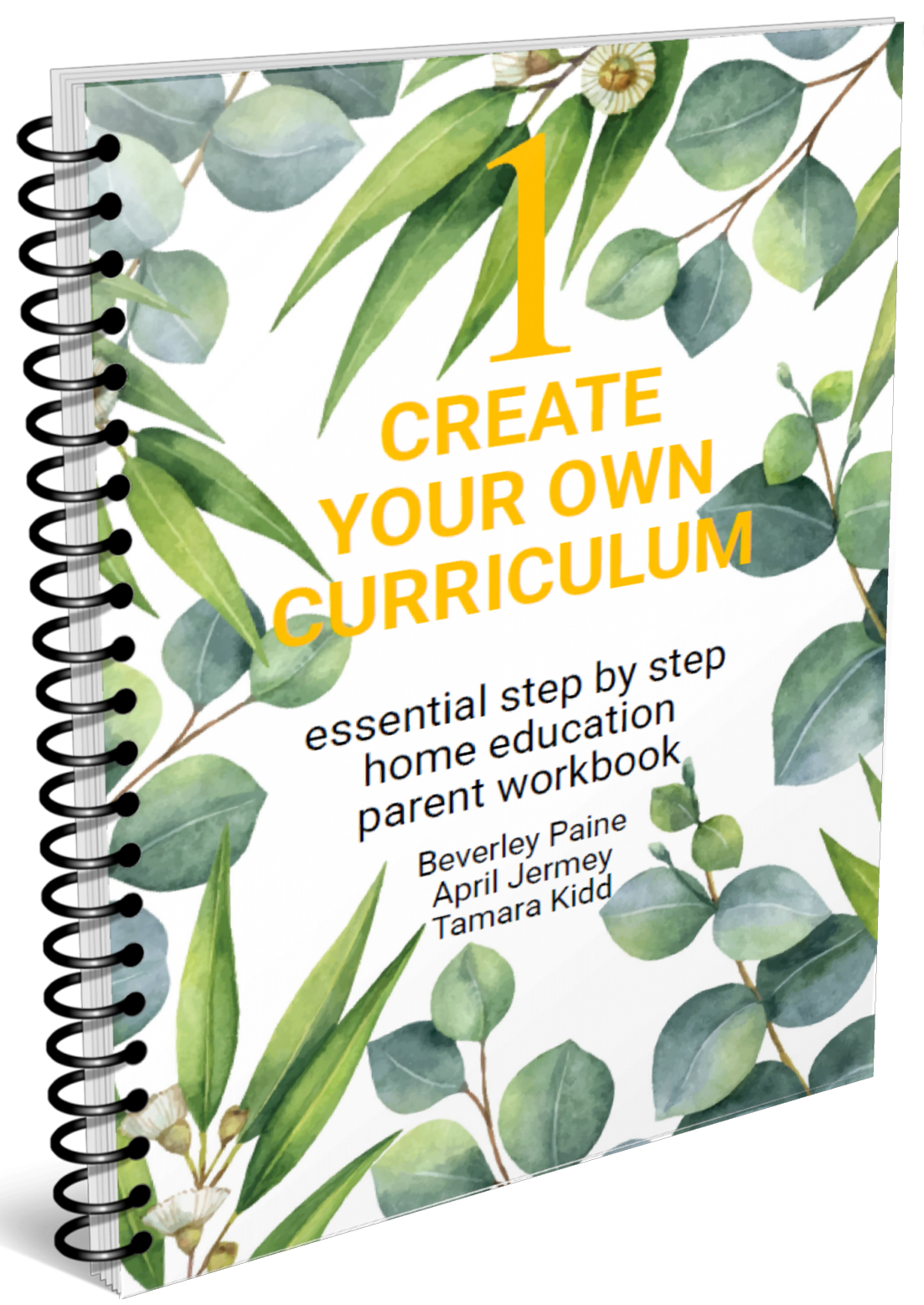
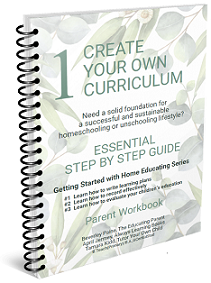
3 ESSENTIAL STEP BY STEP GUIDES
Let experienced home educators Beverley, Tamara and April walk you through HOW to create a learning plan that builds on solid foundations that works for YOUR family AND ticks all the boxes for home educaton registration!
|
Tap into Beverley's
experience
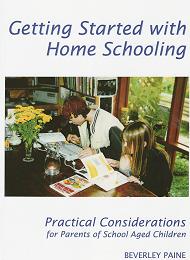
through her books
"Your books, your blogs helped me beyond words... they helped me to find comfort in knowing it is ok to choose exactly what is best for my family." Nisha
"Your books and information are mind blowing and already I am feeling good about this new experience." Diane
"Your guidance, understanding, support & words of wisdom changed our lives." Leslie
"I feel specially inspired by Beverley's words and, the more I read her comments, the more inspired I feel, since my need for support, respect for different parenting styles, and information are fully met." Marijo
|
 |
|

The information on this website is of a general nature only and is not intended as personal or professional advice. This site merges and incorporates 'Homeschool Australia' and 'Unschool Australia'.
The Educating Parent acknowledges the Traditional Aboriginal and Torres Strait Islander Owners, the Custodians of Australia, and pay our respects to Elders past and present and extend that respect to Aboriginal and Torres Strait Islander people viewing this website.
Advertise on this site.






Australia's premier online annual conferences, lifetime access to video and audio recordings, freebies, notes and associated resource guides.
EVERY SUMMIT IS UNIQUE!
$29 each  2023 2023  2022 2021 2022 2021
$25 each 2020 2019 2017
"Biggest and best Aussie homeschool event of the year!"
Home education is a legal alternative
to school education in Australia.
State and Territory governments are responsible
for regulating home education and have different
requirements, however home educating families
are able to develop curriculum and learning programs
to suit the individual needs of their children.

Without revenue from advertising
by educational suppliers and Google Ads
we could not continue to provide information
to home educators. Please support us by letting
our advertisers know that you found them on
The Educating Parent. Thanks!
|
 About
About

 Thank you for visiting!