|
Learning Maths Naturally
"How do children, especially teenagers learn maths naturally. I see how we use maths in daily life, but how do we learn these skills without texts?" Luci
Beverley answered:
What we do in daily life determines what maths we use and learn. The more we use our mathematical abilities the more we learn! If our lives are rich in opportunities to think mathematically, logically, rationally, recognise and use the patterns that are all about us every day; if we use our brains to calculate, and work out how to calculate mostly by thinking about how to do it, testing and trying out methods we dream up...
All this adds up to learning maths naturally and it is surprising how much we can learn without the help of others. Remember, once upon a time there were no books and that humanity came a long way without them!
Most of the maths we use is every day maths... those that use 'higher' maths are naturally drawn to learning those skills - originally from mentors and those they admired and wished to emulate, or as apprentices (working on the job, figuring out stuff because of a real need, rather than a 'curriculum' requirement. A text book can be a most suitable tutor. Natural learners use the tools they need to reach the goals they themselves set.
A busy life with lots to do, with a focus on practical projects and production basically ensures the development of natural maths skills. Most children will never become mathematicians, just like some children won't become authors or orators. We all need the basics though. Ask yourself what those basics are and concentrate on helping your children achieve mathematical proficiency in those areas through every day activities and then, when they reach the teenage years let them take their own learning on from there.
But exactly how to children learn maths skills naturally without text books - what does the process of learning look like? We all know our children seem to simply 'pick up' basic maths just from every day activities, but what goes on in their heads. I think it has a lot to do with recognising, manipulating and using patterns, but I'm no expert and I'm curious. What do other people think? Is it just a matter or leading a busy productive life which is what I keep telling people, or is there more to it than that?
From Grace:
"Our children are in their teens. I believe that they learned the basic maths skills when they were young, just through their curiosity and our lifestyle. As our eldest approached her teen years, she began comparing herself to others and felt that she wasn't doing enough maths study. Because she wasn't doing maths exercises every day I could see that she wasn't very confident in her skills and she believed that because she wasn't doing as much bookwork as her schooled friends, then she mustn't be doing enough. Also, none of the children were good with quick recall of number facts (Although they were each able to calculate what they need to know, it just wasn't automatic.)
"What did we do about it?
"We bought a workbook called "New Wave Mentals", published by R.I.C Publications. The children each chose a level they were comfortable with. It provided them with a daily set of 20 exercises, taking about ten minutes to complete. They each liked it and I could see that they were becoming more confident about their skills. The eldest child also went on to study "Teach Your Children Tables" by Bill Handley. As a family we also looked into Vedic Maths. This was interesting and tied in with what Bill Handley actually presented in his book but it didn't give us a lot of practical help. It was more inspirational really.
"In our life nowadays the children are needing to calculate interest rates; calculate area; doubling and halving of fractions when they are cooking or mixing up two stroke fuel; measuring and calculating how much fabric to buy; measuring time taken to travel to places; measuring speed and so on. They are able to do all of these things in their head. They're not super fast at it - this kind of thinking is not one of their greater strengths - but they are still able to do it and come up with an accurate answer. They're problem solving skills are very good.
"Sometimes Dad gets a little worried that they are not as fast at calculating things as he thinks they should be - at other times he is impressed by what they are able to do! The long and short of it is that we are not outstanding in everything we do but we are really good where it matters most. One thing I am certain of is: They will be able to manage their own monies and other needs requiring mathematical skill when they are living away from the family. It all depends on your own level of comfort and what level of proficiency the teenage child is comfortable with."
Maria Droujkova of Natural Maths likens learning mathematical skills to the way children learn how to speak. Learning to speak is:
"... one of the most advanced, complex, psychologically involved learning tasks humans ever experience in their lives. It is more complicated than any graduate level course you will ever take. Yet the success of people attempting this learning task is almost universal. People e ngage in this learning task early in their lives, when they have no prior learning experiences. The task is learning to speak. How is this powerful learning achieved? The features of learning to speak are parts of my definition of "natural":
- A community of practice: the learner is a part of a group of people actively using the skill all the time.
- Usefulness: the skill is essential for current life needs.
- Beauty and fun: the skill supports aesthetic and playful activities (the arts and the games).
- Learners are creators: from the very beginning, the skill supports learners in creating something of their own (sounds, words, sentences, stories).
- Infinite richness and complexity: learners can observe masters of the skill, past and present, and their masterpieces, and aspire to reach and surpass such mastery .
Math can be like that: a part of our native language."

Was this article helpful? Was it worth $1.00 to you?
Your gift of $1 or more helps to keep this site operating
offering encouragement
and reassurance to families
wanting
better outcomes for their children.
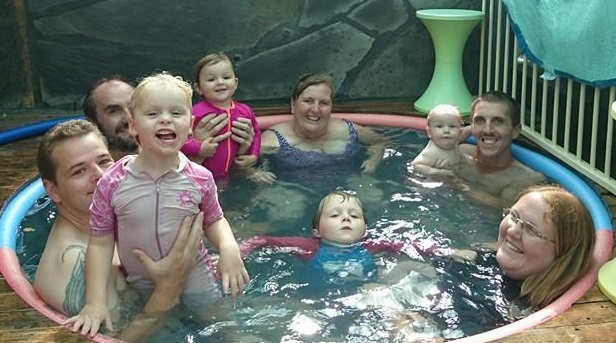
Beverley Paine with her children, and their home educated children, relaxing at home.
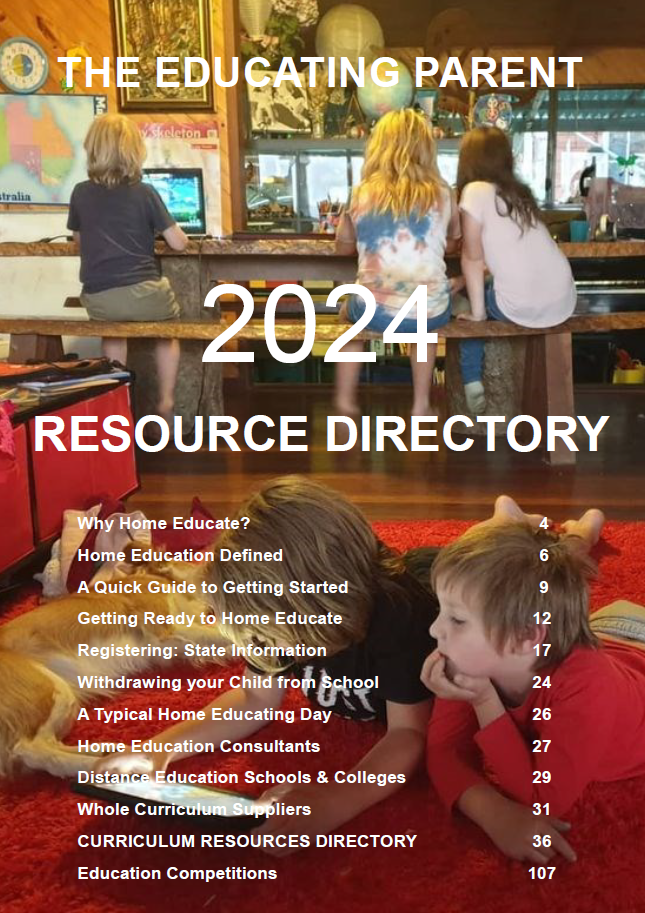
Together with the support of my family, my aim is to help parents educate their children in stress-free, nurturing environments. In addition to building and maintaing this website, I continue to create and manage local and national home educating networks, help to organise conferences and camps, as well as write for, edit and produce newsletters, resource directories and magazines. I am an active supporter of national, state, regional and local home education groups.
"You've been an inspiration to me, I love the way
you really listen to people." Vanessa
"Whenever I read your writing I always come away
with increased confidence in my ability to provide and
share a wonderful learning journey with my family!" Davina
"Your guidance, understanding, support and words of
wisdom changed our lives. We now offer support and
organise many homeschooling events for others." Lesley
"Thank you once again for your prompt and friendly service.
I am convinced that your books are going to add
quality and peace of mind to my journey of teaching my kids
at home! Just from studying your website, until almost
2am
in the morning, I 've been encouraged!" Louisa
"Thank you for all your many,many reassuring words
over many, many years. You probably don't know exactly how
valuable you are to the Australian Home Education community.
I've been reading your stuff for maybe 8 years or more now.
And I'm very grateful." Gythaa

CLICK HERE
if you want to learn
how to write your own education plans
to suit
your unique children's
individual learning needs?
Or you are looking for quality curriculum and teaching tips...
|
|
Welcome to the World of Home Education
and Learning without School!
We began educating our children in 1985, when our eldest was five. In truth, we had helped them learn what they need to learn since they were born. I am a passionate advocate of allowing children to learn unhindered by unnecessary stress and competition, meeting developmental needs in ways that suit their individual learning styles and preferences. Ours was a homeschooling, unschooling and natural learning family! There are hundreds of articles on this site to help you build confidence as a home educating family. We hope that your home educating adventure is as satisfying as ours was! Beverley Paine
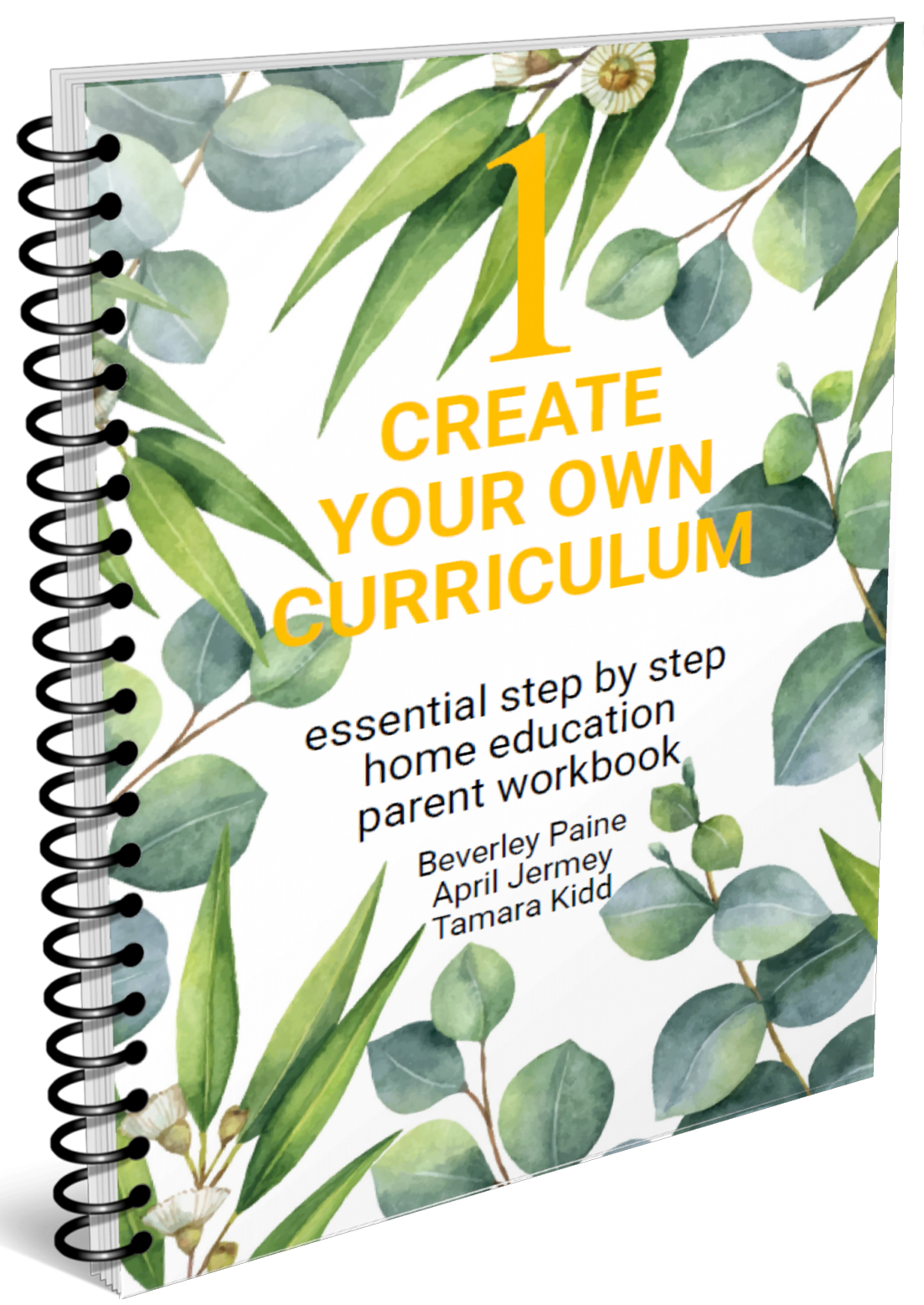
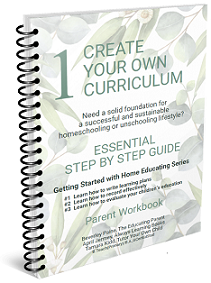
3 ESSENTIAL STEP BY STEP GUIDES
Let experienced home educators Beverley, Tamara and April walk you through HOW to create a learning plan that builds on solid foundations that works for YOUR family AND ticks all the boxes for home educaton registration!
|
Tap into Beverley's
experience
through her books
"Your books, your blogs helped me beyond words... they helped me to find comfort in knowing it is ok to choose exactly what is best for my family." Nisha
"Your books and information are mind blowing and already I am feeling good about this new experience." Diane
"Your guidance, understanding, support & words of wisdom changed our lives." Leslie
"I feel specially inspired by Beverley's words and, the more I read her comments, the more inspired I feel, since my need for support, respect for different parenting styles, and information are fully met." Marijo
|
 |
|

The information on this website is of a general nature only and is not intended as personal or professional advice. This site merges and incorporates 'Homeschool Australia' and 'Unschool Australia'.
The Educating Parent acknowledges the Traditional Aboriginal and Torres Strait Islander Owners, the Custodians of Australia, and pay our respects to Elders past and present and extend that respect to Aboriginal and Torres Strait Islander people viewing this website.
Advertise on this site.



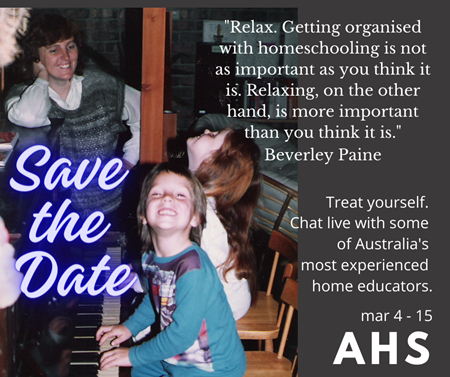
Australia's premier online annual conferences, lifetime access to video and audio recordings, freebies, notes and associated resource guides.
EVERY SUMMIT IS UNIQUE!
$29 each  2023 2023  2022 2021 2022 2021
$25 each 2020 2019 2017
"Biggest and best Aussie homeschool event of the year!"
Home education is a legal alternative
to school education in Australia.
State and Territory governments are responsible
for regulating home education and have different
requirements, however home educating families
are able to develop curriculum and learning programs
to suit the individual needs of their children.

Without revenue from advertising
by educational suppliers and Google Ads
we could not continue to provide information
to home educators. Please support us by letting
our advertisers know that you found them on
The Educating Parent. Thanks!
|
 About
About

 Thank you for visiting!