Summary of Feedback
from members of the home educating community regarding the 2013 revised NSW OBoS Home Education Information Pack
compiled by Beverley Paine, on behalf of the HEA committee
Two thirds of the emails received in feedback placed the ability to continue to create learning plans that matched their children's individual needs as their most important concern; in particular being able to extend their children's learning based on the individual child's ability, interests and motivation. The new requirement to seek approval when working above the approved year level , together with the need to teach the syllabus within the year level on the child's registration certificate , is seen as a major restriction on how families home educate. It was also mentioned by several home educators that they believe this contravenes the Education Act. Home educating children don't learn within prescribed year levels: "children could conceivably change their attainment level several times a year across each subject area". This change was considered unworkable for families whose children had learning differences: gifted, special needs, ASD, etc.
Home educators want their children to be able to learn at their own pace, not prescribed by year level or syllabus outcomes.
Almost a fifth of parents raised the issue that this requirement, together with the need to refer to outcomes when recording, also makes it difficult for group learning - different age children learning the same topic at the same time but on different levels. Siblings working and learning together and helping each other is a strong positive aspect of home education practice.
Over half of the feedback emails claimed that the new requirements would make it difficult to incorporate individual learning needs, styles, interest, pace, talents and abilities of their children into their learning plans - a long standing hallmark of home education practice and the reason many choose home education over school.
Almost two thirds said that the revised guidelines demonstrated the Board of Studies' failure to understand the unique nature of home education and how it is essentially different from school: "home education is more than a mere change in the person delivering content." There was a belief that the revised requirements, with a new and pronounced emphasis on regulation and schooling rather than education and quality, with its focus on written assessment , will act to stifle innovative and individualised pedagogy. It was suggested that the guidelines need to be simplified and streamlined to enable greater participation in the registration process. Ten percent felt that it would be impossible to satisfy the new requirements and that because their children refused to go back to school, they would be forced to home educate without registration and cope with whatever consequences this entailed.
Almost one third of emails received called either for the request to immediately withdraw the revised Information Pack by OBoS , or to push for legislative change .
A fifth of emails received sought clarification for the reasons behind, and justification for, the very many changes which obviously go beyond the need to accommodate the incorporation of the Australian Curriculum into the NSW Board of Studies Syllabus.
Almost half of concerned parents protested about the lack of consultation with peak stakeholders, as well as the removal of mention of support groups other than the Home Education Association. Many related stressful and confusing experiences with Approved Persons implementing the changes prior to the publication of the revised Information Pack. A fifth expressed that the actions of the Board of Studies demonstrated disrespect for the educational motives, aims and efforts of home educating parents.
A third of parents were dismayed at the changed attitude and tone expressed by the revised document, stating that home educators need to be given time to develop and evaluate home education plans, and that they prefer advice about pedagogy and resources rather be forced "to simply have to churn out paperwork". They felt the role of the Home Education Unit within OBoS should be "enabling and supporting parents to home educate, not to restrict them". Despite being a form of private education, home educators are not funded, resourced or supported in any way: under these conditions they "cannot be expected to act like teachers."
It was also pointed out several times that Program Builder via Scootle was only available to registered home educators, thus proving completely useless to new applicants who need the most help in planning learning programs for their children.
The revised Information Pack contained a new focus on the time spent teaching and learning . Several emails (15%) pointed out that home education is more efficient than school, that children don't only learn between the hours of nine and three and that there should be scope for varying the time spent on activities based on the individual learning needs of children. A weekly timetable may work in schools but is not appropriate in most home education environments.
The removal of a spectrum of home education approaches was met with considerable dismay: more than half of the parents said that the new requirements would force a restrictive one-size-fits-all 'school-at-home' approach to home education on their families, making any other method "prohibitively difficult" if not "impossible" and will have the effect of restricting the range of resources home educators currently enjoy using.
Two thirds of the feedback respondents protested against what they saw as unnecessary work and stress which will be caused by the new requirement to reference specific NSW BOS Syllabus Outcomes when planning and recording, saying it would take time away from teaching and helping their children learn. This amount of detail - linking learning activities to syllabus outcomes - is unnecessary in the home learning environment. It was considered "pedantic", "onerous", "restrictive", "unnecessarily limiting", "time consuming", "cumbersome" and a "massive hindrance to fostering a love of learning". Parents are aware of the content and direction of the NSW Syllabus and naturally seek to guide their children to learn what is appropriate and necessary to ensure their educational development. There was general concern that this requirement removes flexibility in how home educators can meet educational objectives. Several mentioned that a portfolio approach to recording was more suited the home educating environment.
Almost half of the feedback focused on multiple visits per year by APs ; the removal of renewal by documentation, and shorter periods of registration (even for experienced home educators). Several issues arose: having to seek approval for changes in learning plans; registration for individual children necessitating many interviews; new 'spot visits' without notification; and inflexibility of OBoS with regard to appointment times and appropriate time allowed for interviews. The justification for the imposition of 'spot visits' was questioned: "distance education students do not have their homes checked"; and, "The monitoring of compliance with the requirements for registration is addressed in the re-registration process itself - any further monitoring could be considered harassment under the law.'
One third of feedback emails expressed confusion on the new emphasis on the home as the place of learning - that only learning delivered in the home will now being counted as towards registration. Several cited examples of how this was already being implemented and enforced by APs in recent months. It was felt that this new requirement would restrict learning opportunities and be socially isolating. Parents who incorporate regular travel into their home educating lifestyle or for income related activities felt this was particularly discriminating and limiting.
There was a general feeling that the OBoS mistrusted home educators, the feeling was mutual. A few mentioned the need to know what criteria they were being assessed against. A few said they weren't going to register because they were afraid they'd be refused.
Conscientious objectors on the grounds of religion strenuously protested the change in definition saying that they felt they were being forced to teach content contrary to their religious beliefs.
Other issues: children present during interviews was seen as intrusive, especially by parents of children with special needs (discussing issues about development and education in front of them); request for all previous academic records may prove difficult to manage; no provision for senior high school certificate, approved course of study, especially discriminating with respect for Centrelink purposes; a general vagueness about period of registration; a need for conscientious objection grounds to using the NSW Syllabus other than religion; and the removal of privacy statement.
See also:
Was this article helpful? Was it worth $1.00 to you?
Your gift of $1 or more helps to keep this site operating
offering encouragement
and reassurance to families
wanting
better outcomes for their children.
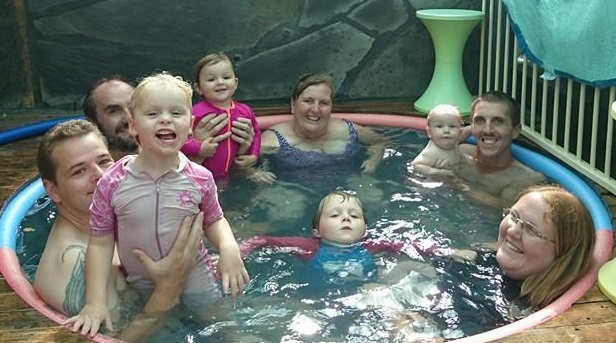
Beverley Paine with her children, and their home educated children, relaxing at home.
Together with the support of my family, my aim is to help parents educate their children in stress-free, nurturing environments. In addition to building and maintaing this website, I continue to create and manage local and national home educating networks, help to organise conferences and camps, as well as write for, edit and produce newsletters, resource directories and magazines. I am an active supporter of national, state, regional and local home education groups.
"You've been an inspiration to me, I love the way
you really listen to people." Vanessa
"Whenever I read your writing I always come away
with increased confidence in my ability to provide and
share a wonderful learning journey with my family!" Davina
"Your guidance, understanding, support and words of
wisdom changed our lives. We now offer support and
organise many homeschooling events for others." Lesley
"Thank you once again for your prompt and friendly service.
I am convinced that your books are going to add
quality and peace of mind to my journey of teaching my kids
at home! Just from studying your website, until almost
2am
in the morning, I 've been encouraged!" Louisa
"Thank you for all your many,many reassuring words
over many, many years. You probably don't know exactly how
valuable you are to the Australian Home Education community.
I've been reading your stuff for maybe 8 years or more now.
And I'm very grateful." Gythaa


Want to learn how to write your own education plans
to suit your unique children's individual learning needs?
Or you are looking for quality curriculum and teaching tips...
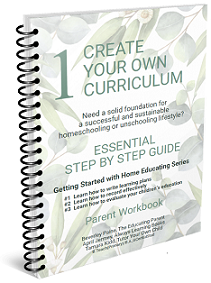
Comprehensive 3 workbook 'how to home ed' course
covering the essential skills you need
successfully home educate your children
 About
About










 Thank you for visiting!