|
What is all the Fuss about Reading (Fiction) Anyway!
Beverley Paine, 2004
Everywhere I look in early childhood education there is this incredible emphasis and focus on reading fiction! I agree that learning to read is invaluable, if not essential, in an educational program, and that it is desirable to learn to read. But there are many ways to learn how to read... I find that the promotion of reading fiction, that is, stories and novels, above all else as the desirable end point of learning how to read quite off-putting!
I am a good reader - I love to read, and spent countless hours 'lost' in books as a child. My daughter taught herself to read at the age of three and a half, although I don't actually remember this - thank goodness for those meticulous records I kept! She is an avid reader, finishing two to three novels each week. Robin (father) and Roger don't read a lot, and when they do it is mostly for information. In fact reading for information is quite a pleasurable past-time in itself. At nine, Thomas is just learning to read, and prefers non-fiction as well. Much has been made of the fact that girls love to read fiction and most boys don't, and I still don't know why!
Reading fiction is pushed on nearly every child in our society, and a child is considered a 'poor reader' if he or she doesn't indulge in a love of books by an early age. As the parent of two non-fiction reading boys I ask myself regularly - why be concerned? Why do we need to encourage reluctant boy readers to read more, especially fiction, something they seem to avoid?
I've read all the arguments about why it is important for children to learn to love literature - I am studying children's literature and education at university level at present. All of these arguments are mostly stated, as far as I can make out, by people who love to read, who are passionate about reading, and do a lot of it themselves. Where are the opinions of those who don't share a passion for reading? Certainly not being quoted in the books apprentice teachers read!
As a society we really value reading, and there is a tremendous social stigma connected to not reading. It is terrible being the only person at a party who isn't discussing the latest novel... try being a writer who doesn't read fiction... it is a real conversation stopper!
One of my concerns arising from my early childhood education university studies is the dominance placed on learning to read over all the other skills, including mathematics and science. Learning to read, in early childhood education, is more often than not narrowly focussed on reading fiction . Reading for information seems to considered just a by-product of learning to love literature and reading fictional stories.
Surely reading for information is a far more important skill than reading for pleasure? Although I do believe all the members of my family find it pleasurable to read for information, or they wouldn't do it! I rarely read fiction nowadays, however I find it tremendously stimulating when I do. Over the years I have found literature, great fictional stories, often take me far away from the real world. I become anti-social and distant, not only when I am reading a book, but also sometimes for hours afterwards as I remain immersed in the fictional landscape. Literature really affects me; my journey into the story is always a deep and personally meaningful experience.
I am a busy person and don't always have the luxury of the time to delve deep into a novel. I prefer to be entertained with a quick movie a couple of times a week, or the odd television serial. I allow myself lots of time for reading for information, not because I need to know something, but simply for the pleasure of reading and the opportunity to expand my knowledge and understanding of the world I live in. Often novels and stories can stimulate questions and offer knowledge about that world, and I appreciate the role fiction has in conveying culture. But so do many other art forms, and none of these attract a fraction of the attention reading fiction does at school!
I am sometimes amazed at how my men also love to read - for information that is. Perhaps with not the same drive I have, but then I love to study, to stretch my mind by contacting other minds through text. I'd love to expand into the world of conversation more, but find social situations physically stressful, because of my many allergies and sensitivities. So I maintain social contact by writing and reading. The men in the family are all practical, and prefer to use their minds to put their hands to work. Reading is purely for obtaining information so they can engage in pleasurable practical work. Reading magazines and newspapers offer a different kind of information, as do Lego and computer catalogues. The boys tend to read a lot when playing computer games, and have found the stories woven into those games fascinating.
More and more I am tending to celebrate the practical natures of the men in my family, and to recognise they don't have to read fiction in order to succeed at a whole host of very important tasks. As I watch my boys continue to develop their reading skills without engaging in fiction I have to ask why everyone places so much emphasis on young children not only reading fiction, but loving to as well!
Just because for some of us it is a rich source of learning, does that mean everyone has to do it? But that is how education is set up. By age ten every child knows that the 'bookish' student in the class is the one who does well in school. But this is because education is set up this way, and doesn't value learning other than book learning. Forcing children to learn to love fiction is just one way the education system turn many children off from building general reading skills.
Home education is no exception. Pick up any newsletter or journal, speak to any home educator, and reading comes up as a major issue. This is quickly followed by writing, and then spelling. The educational community is obsessed by these narrowly focussed skills.
I mentioned earlier the television. When I was a child televisions were still relatively new; videos and computers didn't exist. My children have grown up with both learning media. I had access to a library, full of words and pictures. I needed to learn to read print. My children access the world via the television, videos and computer. Their need for printed words is, by comparison, much diminished. Is this necessarily a bad thing? Our society is subjected to rapid change - should we accept what the new technologies bring, open minded, or cling to past ways of doing things?
Naturally I encourage critical viewing and usage of these technological learning tools. We discuss what we see and use, always making the experience meaningful to our lives. Used in this way, my children are learning quite a lot. And I think they are learning much the same things I learned from reading books in my younger days. More perhaps. A lot depends on the type of books a person reads, and how many... or what a person watches on television, or uses on the computer...
I think perhaps that the greatest tool we use for learning in this family is talking - and we all learned how to do this so naturally in our first years - without being taught!
It is a changing world. I am sure books will never disappear. The advent of computers has seen an enormous rise in the popularity of books and board games. However, other ways of learning deserve much more merit than they are currently given as learning tools.
We all read and write in this family - we 'read' all sorts of different media, and we write purposefully. I wonder if anybody else is fed up with all the hype about the importance of reading - and by that I mean the sort of reading encouraged in education, mostly fiction.
I believe from experience that learning to read, in order to make sense of your environment and to be able to act effectively in it, comes from being immersed in a world where reading, like talking, is valued as a communication tool. Learning to read is a very natural thing to do, given this support. Reading fiction is like the cream on top of the cake - it has a very important role to play in society, much like artwork, music and performance. But it isn't essential to love fiction to learn how to read, or to be encouraged as a reader. Perhaps the emphasis should shift from reading fiction when we teach our children how to read, to reading for meaning and information.
This does not preclude the reading of stories to babies and toddlers. Or demonstrating our love for stories, or encouraging this love for stories in others. Stories can be told many ways, and books are a very important tool for communicating our stories. And children, both at school and at home, need the opportunity to immerse themselves in the world of fiction, for many mind expanding and enriching reasons.
I have no argument against reading fiction, or learning to love it. I only wish it wasn't the dominant way reading, as a necessary skill in our society, is taught to children!

Was this article helpful? Was it worth $1.00 to you?
Your gift of $1 or more helps to keep this site operating
offering encouragement
and reassurance to families
wanting
better outcomes for their children.
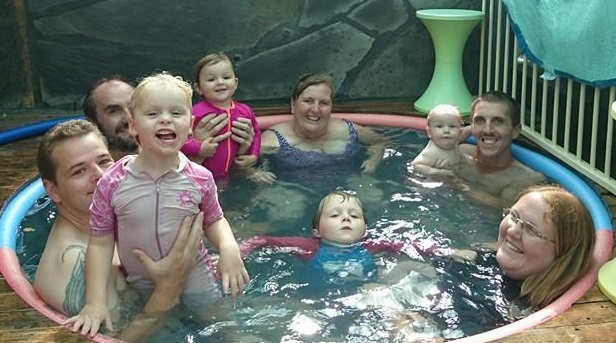
Beverley Paine with her children, and their home educated children, relaxing at home.
Together with the support of my family, my aim is to help parents educate their children in stress-free, nurturing environments. In addition to building and maintaing this website, I continue to create and manage local and national home educating networks, help to organise conferences and camps, as well as write for, edit and produce newsletters, resource directories and magazines. I am an active supporter of national, state, regional and local home education groups.
"You've been an inspiration to me, I love the way
you really listen to people." Vanessa
"Whenever I read your writing I always come away
with increased confidence in my ability to provide and
share a wonderful learning journey with my family!" Davina
"Your guidance, understanding, support and words of
wisdom changed our lives. We now offer support and
organise many homeschooling events for others." Lesley
"Thank you once again for your prompt and friendly service.
I am convinced that your books are going to add
quality and peace of mind to my journey of teaching my kids
at home! Just from studying your website, until almost
2am
in the morning, I 've been encouraged!" Louisa
"Thank you for all your many,many reassuring words
over many, many years. You probably don't know exactly how
valuable you are to the Australian Home Education community.
I've been reading your stuff for maybe 8 years or more now.
And I'm very grateful." Gythaa


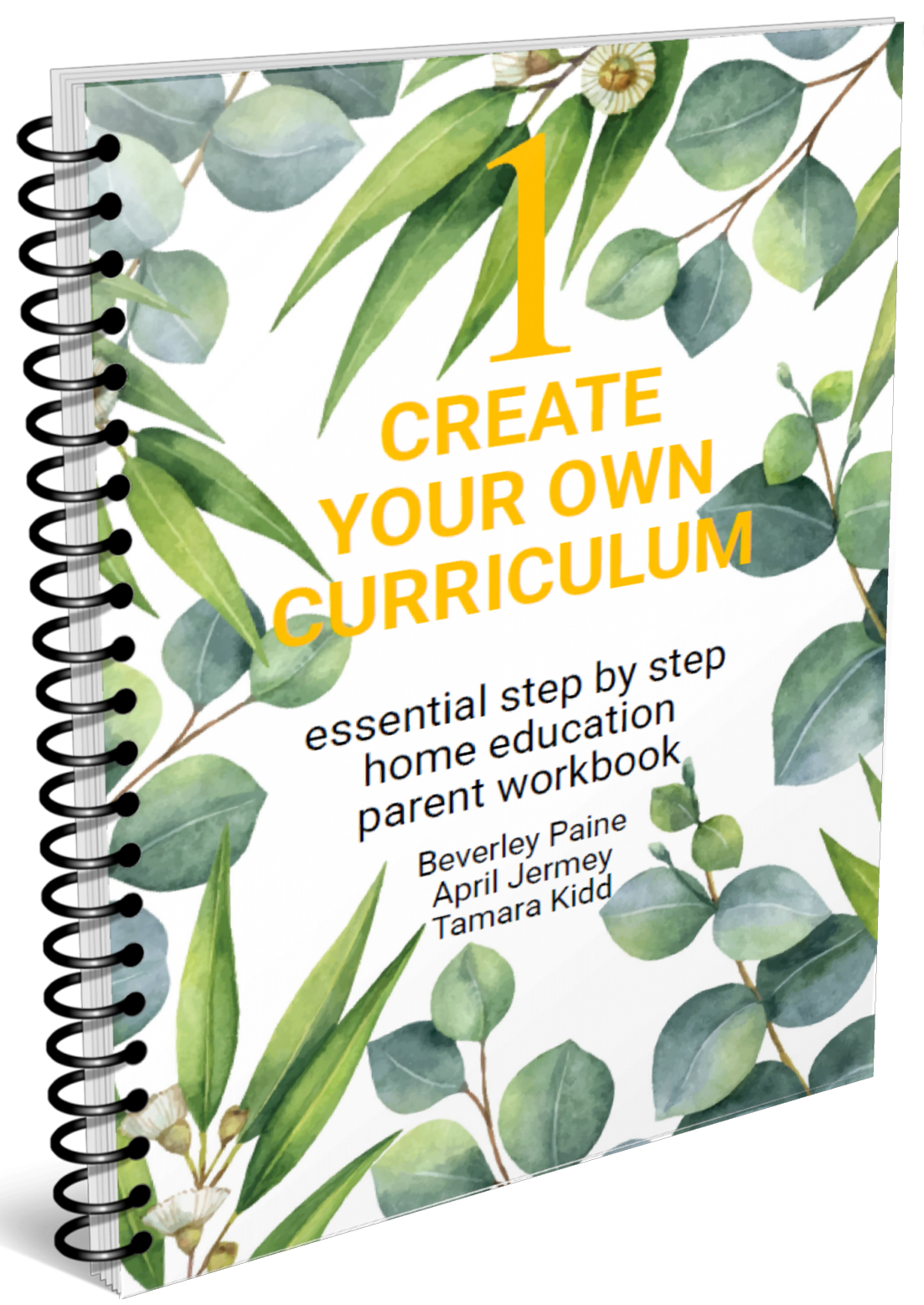
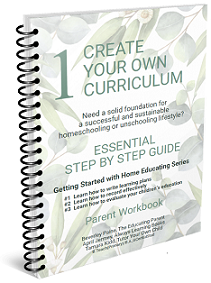
Want to learn how to write your own education plans
to suit your unique children's individual learning needs?
Or you are looking for quality curriculum and teaching tips...
Comprehensive 3 workbook 'how to home ed' course
covering the essential skills you need
successfully home educate your children
|
|
Welcome to the World of Home Education
and Learning without School!
We began educating our children in 1985, when our eldest was five. In truth, we had helped them learn what they need to learn since they were born. I am a passionate advocate of allowing children to learn unhindered by unnecessary stress and competition, meeting developmental needs in ways that suit their individual learning styles and preferences. Ours was a homeschooling, unschooling and natural learning family! There are hundreds of articles on this site to help you build confidence as a home educating family. We hope that your home educating adventure is as satisfying as ours was! Beverley Paine
3 ESSENTIAL STEP BY STEP GUIDES
Let experienced home educators Beverley, Tamara and April walk you through HOW to create a learning plan that builds on solid foundations that works for YOUR family AND ticks all the boxes for home educaton registration!
|
Tap into Beverley's
experience
through her books
"Your books, your blogs helped me beyond words... they helped me to find comfort in knowing it is ok to choose exactly what is best for my family." Nisha
"Your books and information are mind blowing and already I am feeling good about this new experience." Diane
"Your guidance, understanding, support & words of wisdom changed our lives." Leslie
"I feel specially inspired by Beverley's words and, the more I read her comments, the more inspired I feel, since my need for support, respect for different parenting styles, and information are fully met." Marijo
|
 |
|

The information on this website is of a general nature only and is not intended as personal or professional advice. This site merges and incorporates 'Homeschool Australia' and 'Unschool Australia'.
The Educating Parent acknowledges the Traditional Aboriginal and Torres Strait Islander Owners, the Custodians of Australia, and pay our respects to Elders past and present and extend that respect to Aboriginal and Torres Strait Islander people viewing this website.
Advertise on this site.




Home education is a legal alternative
to school education in Australia.
State and Territory governments are responsible
for regulating home education and have different
requirements, however home educating families
are able to develop curriculum and learning programs
to suit the individual needs of their children.

Without revenue from advertising
by educational suppliers and Google Ads
we could not continue to provide information
to home educators. Please support us by letting
our advertisers know that you found them on
The Educating Parent. Thanks!
|
 About
About
 Thank you for visiting!