|
"Is Thomas reading yet?"
By Beverley Paine
An excerpt from Learning in the Absence of Education
And then there is the predictable, annual, question. "Is Thomas reading yet?" my mother asks, yet again, on the phone. "He's coming along nicely now, thank you." I answer.
Just what do you say to all those people who care, and worry, about your boy's reading ability? Thomas didn't pick reading up at five, like everyone(?) else; his sixth birthday came and went and he still needed help with reading his birthday cards; seven saw him writing lists with help; eight saw him copying out words for his stories; nine saw him trying to decipher the Lego catalogue; ten saw him once more needing the Stars Wars subtitles read aloud to him, and then finally, later in that year, he began to read simple sentences, lists and books with relative ease!
What happened to make it all come together? Had I finally 'taught' him to read? I don't believe so. And I don't believe all the worrying was very useful either, but with so much pressure from other people to get Thomas to read before he was well and truly ready, it was hard to resist. The most difficult part was resisting the urge to compare him with others, especially his siblings. I was very grateful his brother learned to read slowly, finally reading reasonably well and independently by eight and a half years. Not that Roger then chose to use his reading skills to read novels. At fourteen, and with very little reading experience behind him, he is able to read anything he wants or has need to.
Like most parents we started to encourage Thomas to learn to read at around age four, preceded by the usual reading aloud of picture books as a baby and toddler. Years of gentle 'teaching' and persuasion followed, using the usual tools of phonics, early childhood readers, picture books, reading readiness work books, personal and picture dictionaries, computer games, projects, story writing, daily diaries, puzzles and games. We tried to concentrate on writing and reading activities that were meaningful in his life, as well as simply pleasurable. At times Thomas was exposed to off the shelf activity work books, and he completed all of these without problems. He just couldn't read yet.
I read volumes of works dedicated to how children learn to read and write. We didn't put a lot of pressure on Thomas, telling him it would happen when he was ready. We just weren't ready for that to be when he was ten and a half!
Thomas's reading ability continued its slow rate of improvement. There was nothing either of us could do to accelerate his skill building, without imposing tedious remedial learning tasks that served only to frustrate Thomas further, and to diminish his self esteem, as most concentrated on simple phonic skill building.
We didn't 'teach' reading every day, but focused on it in spurts. Nothing I tried had any lasting effect. It was like putting a long, slow jigsaw puzzle together. His motivation to read was always high; he wanted to be able to read, but it just wasn't important enough most of the time. There was always something else to do. He was busy, active, learning all the time a tremendous amount of knowledge about the world about him, without needing to read. He had accumulated a lot of useful, practical skills, without needing to read. Reading just wasn't that necessary.
We did come across a list of words, one hundred of the most common words in the English language. Thomas rote learned about sixty of these, and that helped. But still progress beyond this stage was slow.
Despite being unable to read Thomas was fascinated by print. He would 'read' the dictionary while playing scrabble, from the age of four! He looked at magazines, sometimes for hours a day. He poured over the writing in his Lego catalogues, learning to read the words, just as his brother had before him. Slowly, ever so slowly it did all come together, until the day came that Thomas found that he couldn't stop reading. Whatever was lying around on the table, or posted on the wall, advertisements when out shopping - Thomas was reading, or trying to read them all.
I believe he is able to read now at this age, because finally the letters are connecting into words in a meaningful way in his head. It seems to be a brain readiness thing. Thomas hasn't been disadvantaged by this 'lateness' of reading. Our emphasis on reading with meaning and our example of daily reading for meaning ourselves have been important elements of his 'reading program'. The most important element, however, was our ever present trust he would eventually learn to read, in his own way, in his own time!
At twelve years of age he still had a long way to go. But we were reassured that at least he was moderately independent. He didn't consider himself learning disabled, although understands that a school would have labeled him thusly. He knows he is learning differently, and at a different rate, to other children.
When his grandmother comes to visit next time Thomas will be able to answer her question, confidently and happily, dispelling her unnecessary worry about his reading ability.

Thomas is now 25 and has no problems with reading or writing: he has been publishing articles on the internet since age seventeen when he built an online forum www.offroadingsubarus.com . At the age of six Thomas said he wanted to be a writer when he grew up and so he is! A late start didn't diminish his ability to fulfill his ambition. Lots of loving attention, together with protection from harmful criticism and judgment of his abilities at an early age were the key ingredients in achieving this success.

Was this article helpful? Was it worth $1.00 to you?
Your gift of $1 or more helps to keep this site operating
offering encouragement
and reassurance to families
wanting
better outcomes for their children.
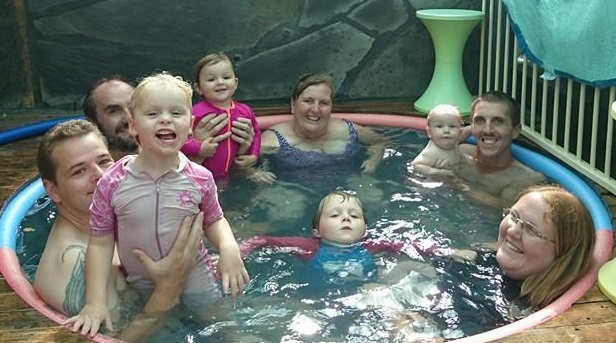
Beverley Paine with her children, and their home educated children, relaxing at home.
Together with the support of my family, my aim is to help parents educate their children in stress-free, nurturing environments. In addition to building and maintaing this website, I continue to create and manage local and national home educating networks, help to organise conferences and camps, as well as write for, edit and produce newsletters, resource directories and magazines. I am an active supporter of national, state, regional and local home education groups.
"You've been an inspiration to me, I love the way
you really listen to people." Vanessa
"Whenever I read your writing I always come away
with increased confidence in my ability to provide and
share a wonderful learning journey with my family!" Davina
"Your guidance, understanding, support and words of
wisdom changed our lives. We now offer support and
organise many homeschooling events for others." Lesley
"Thank you once again for your prompt and friendly service.
I am convinced that your books are going to add
quality and peace of mind to my journey of teaching my kids
at home! Just from studying your website, until almost
2am
in the morning, I 've been encouraged!" Louisa
"Thank you for all your many,many reassuring words
over many, many years. You probably don't know exactly how
valuable you are to the Australian Home Education community.
I've been reading your stuff for maybe 8 years or more now.
And I'm very grateful." Gythaa

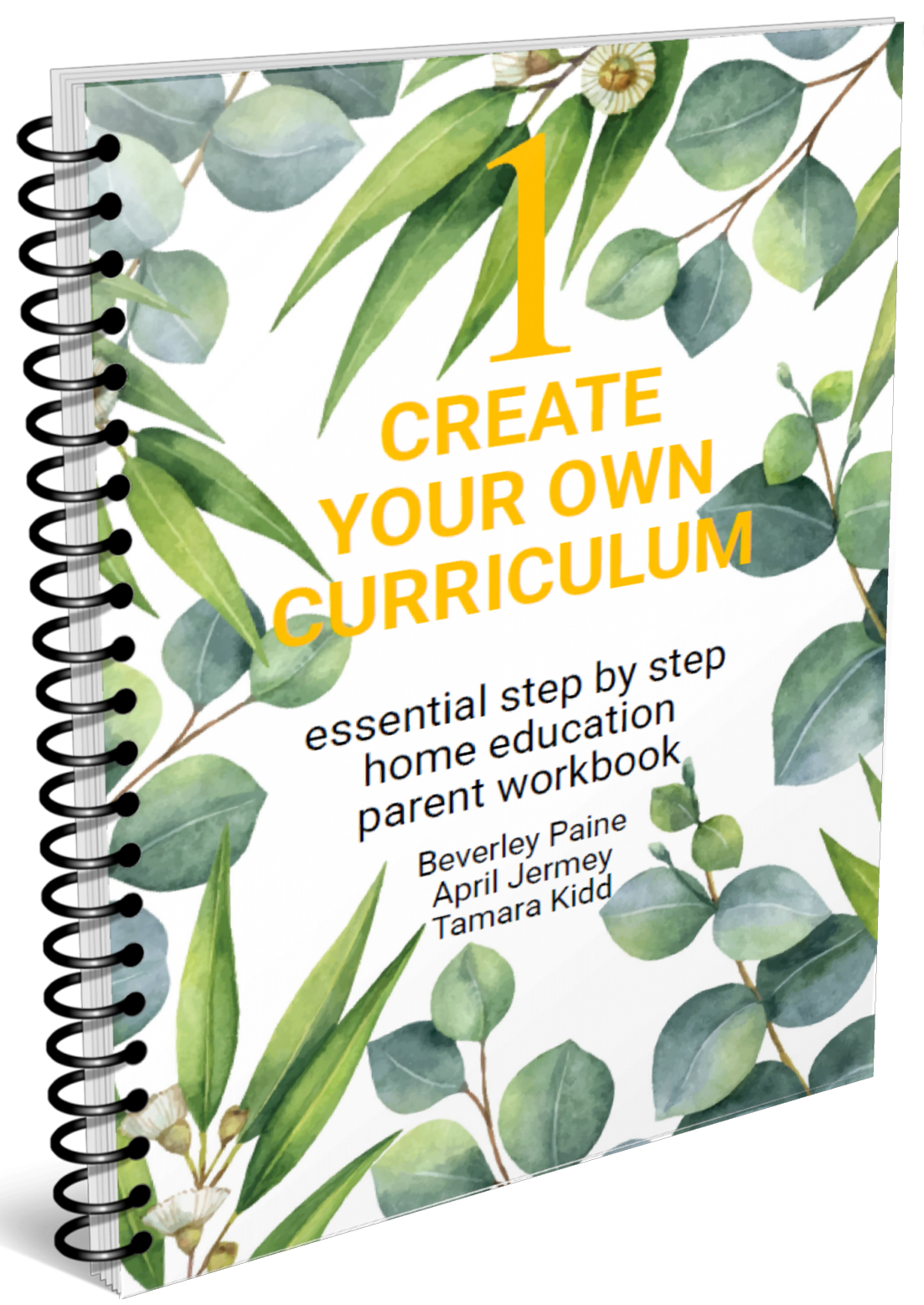
Want to learn how to write your own education plans
to suit your unique children's individual learning needs?
Or you are looking for quality curriculum and teaching tips...
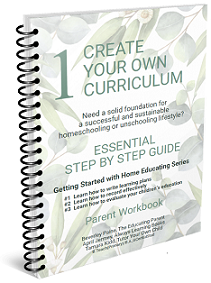
Comprehensive 3 workbook 'how to home ed' course
covering the essential skills you need
successfully home educate your children
|
|
Welcome to the World of Home Education
and Learning without School!
We began educating our children in 1985, when our eldest was five. In truth, we had helped them learn what they need to learn since they were born. I am a passionate advocate of allowing children to learn unhindered by unnecessary stress and competition, meeting developmental needs in ways that suit their individual learning styles and preferences. Ours was a homeschooling, unschooling and natural learning family! There are hundreds of articles on this site to help you build confidence as a home educating family. We hope that your home educating adventure is as satisfying as ours was! Beverley Paine
3 ESSENTIAL STEP BY STEP GUIDES
Let experienced home educators Beverley, Tamara and April walk you through HOW to create a learning plan that builds on solid foundations that works for YOUR family AND ticks all the boxes for home educaton registration!
|
Tap into Beverley's
experience
through her books
"Your books, your blogs helped me beyond words... they helped me to find comfort in knowing it is ok to choose exactly what is best for my family." Nisha
"Your books and information are mind blowing and already I am feeling good about this new experience." Diane
"Your guidance, understanding, support & words of wisdom changed our lives." Leslie
"I feel specially inspired by Beverley's words and, the more I read her comments, the more inspired I feel, since my need for support, respect for different parenting styles, and information are fully met." Marijo
|
 |
|

The information on this website is of a general nature only and is not intended as personal or professional advice. This site merges and incorporates 'Homeschool Australia' and 'Unschool Australia'.
The Educating Parent acknowledges the Traditional Aboriginal and Torres Strait Islander Owners, the Custodians of Australia, and pay our respects to Elders past and present and extend that respect to Aboriginal and Torres Strait Islander people viewing this website.
Advertise on this site.



Home education is a legal alternative
to school education in Australia.
State and Territory governments are responsible
for regulating home education and have different
requirements, however home educating families
are able to develop curriculum and learning programs
to suit the individual needs of their children.

Without revenue from advertising
by educational suppliers and Google Ads
we could not continue to provide information
to home educators. Please support us by letting
our advertisers know that you found them on
The Educating Parent. Thanks!
|
 About
About
 Thank you for visiting!