|
Jump-start reading tips for reluctant readers
Beverley Paine, May 2004
Every parent wants their child to be a strong reader, but some children either have an aversion to reading or develop reading skills late. Because so much emphasis is placed on reading, this can lead to a great deal of anxiety for the parent and frustration and low self-esteem for the child. If there is a chance your child may have a physical problem visit a developmental optometrist for evaluation. Children learn to read at vastly different ages, from three to thirteen, but if you are worried and your child is keen to read but can't master the basic skills, it's reassuring to seek an expert opinion.
I don't believe in the myth that everything a child learns must be fun - children aren't like that. They learn most of their important lessons when they aren't having fun, but when the work is serious and meaningful to them. So I'm not going to say, as many reading experts have, make reading enjoyable. Sure, your child is likely to spend more time at activities they enjoy, but if they can't read yet, or don't like reading, how are you going to make it fun? I say, make it personally meaningful to them.
When I think about why I want my children to learn how to read it is because I want to share with them wisdom have passed down through the ages; give them to access information that will empower them and help them make important decisions throughout their lives; and also to communicate effectively with others. Many of the following suggestions will help improve your child's vital comprehension skills - even without a book in his or her hands!
Be sure to emphasize the importance of communication by modelling and expecting appropriate listening habits. This means making sure you have your child's attention or he has yours whenever you talk. I did this by saying the child's name at the beginning, rather than at the end of my sentence, and by making eye contact from time to time as we speak. I wait until the child has finished concentrating on whatever task he or she is doing before speaking. My presence is often enough to alert the child that I want to say something and she will usually look up expectantly.
Encourage conversation. Most of us would be surprised at how little we actually talk with our children. Notice I said 'with' and not 'to'. There is a difference. Share ideas, ask questions, seek clarification if you don't fully understand or if there is a chance you are assuming that you've got the picture - remember your life experiences often mean that your way of seeing things is very different to your child's.
Don't lapse into verbal laziness and use words like 'thing' or other such generic words. Everything has a name. As does every action. Use nouns and verbs; describe precisely what you mean. Use adjectives and adverbs to help expand your child's vocabulary and to help her identify relationships such as similarities, opposites, sequences, cause and effect, examples, etc. Make vocabulary a family activity. Do crosswords together, or make your own. Play word games and encourage the dictionary and thesaurus.
Read to your child, just for fun, or whenever he or she asks you. Don't make every attempt to read a 'lesson'. We accepted that our children would learn to walk and talk in time, given appropriate encouragement and an environment that supported the development of those skills. Read in front of your child so that your child sees you reading for information and enjoyment often.
Read books and articles on topics that interest your child so that you can share ideas. Don't forget to talk about what you are reading if you are reading together. Talk about your own experiences or his and compare them to what you are reading. Borrow or buy books that you think may interest him, or extend his interests further. Another great idea is to encourage your child to have a question in mind when reading for information.
When your child is reading aloud and makes an error that changes or destroys meaning, gently ask at the end of the sentence, "Did that make sense?" Sometimes misplaced punctuation can change the meaning of the sentence. Query the action in the story, or the information, so that the child has the chance to reread the section. Explain the role of punctuation. It helps to model reading with expression whenever you read aloud.
It goes without saying that nobody likes to be forced to do anything, and we don't particularly like to be bribed with rewards either. Let children discover and enjoy the power of reading without coercion. Don't expect your children to read every word, or particular books. Learn to recognise where you child is already using and practicing her reading skills. It may be playing computer games, or reading LEGO catalogues, as mine did, or it may be the labels on cereal packets at breakfast time. Young children practice reading every time they go for a drive and delight in recognising letters and words from signs.

Was this article helpful? Was it worth $1.00 to you?
Your gift of $1 or more helps to keep this site operating
offering encouragement
and reassurance to families
wanting
better outcomes for their children.
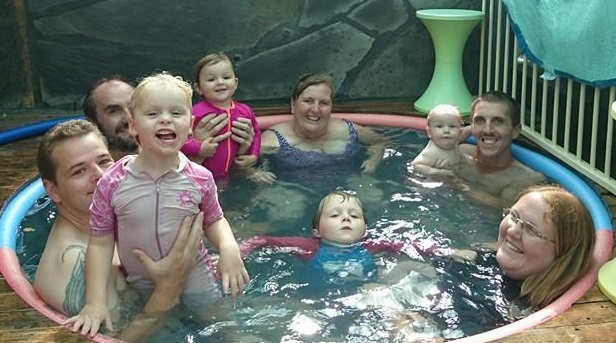
Beverley Paine with her children, and their home educated children, relaxing at home.
Together with the support of my family, my aim is to help parents educate their children in stress-free, nurturing environments. In addition to building and maintaing this website, I continue to create and manage local and national home educating networks, help to organise conferences and camps, as well as write for, edit and produce newsletters, resource directories and magazines. I am an active supporter of national, state, regional and local home education groups.
"You've been an inspiration to me, I love the way
you really listen to people." Vanessa
"Whenever I read your writing I always come away
with increased confidence in my ability to provide and
share a wonderful learning journey with my family!" Davina
"Your guidance, understanding, support and words of
wisdom changed our lives. We now offer support and
organise many homeschooling events for others." Lesley
"Thank you once again for your prompt and friendly service.
I am convinced that your books are going to add
quality and peace of mind to my journey of teaching my kids
at home! Just from studying your website, until almost
2am
in the morning, I 've been encouraged!" Louisa
"Thank you for all your many,many reassuring words
over many, many years. You probably don't know exactly how
valuable you are to the Australian Home Education community.
I've been reading your stuff for maybe 8 years or more now.
And I'm very grateful." Gythaa


Want to learn how to write your own education plans
to suit your unique children's individual learning needs?
Or you are looking for quality curriculum and teaching tips...
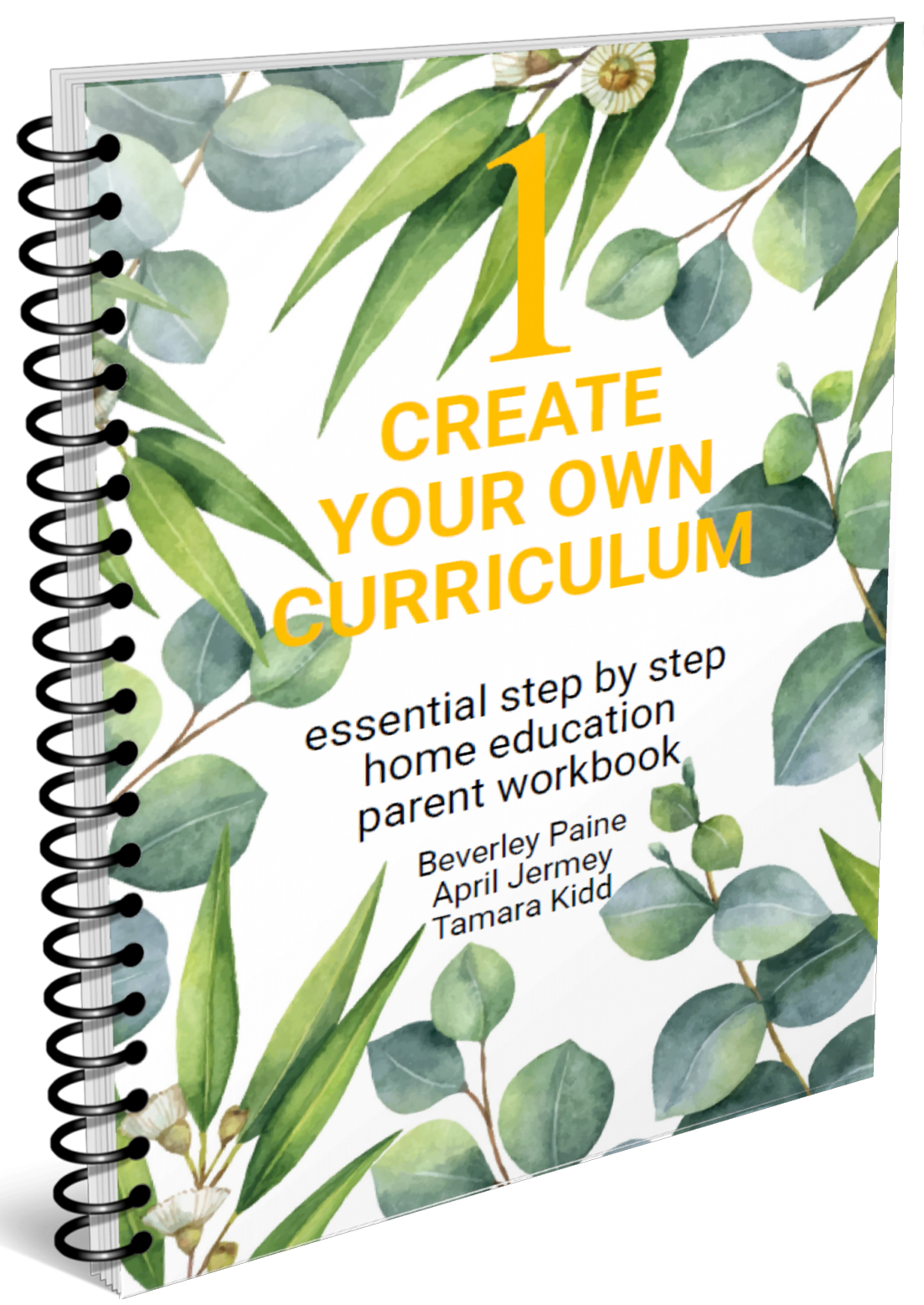
Comprehensive 3 workbook 'how to home ed' course
covering the essential skills you need
successfully home educate your children
|
|
Welcome to the World of Home Education
and Learning without School!
We began educating our children in 1985, when our eldest was five. In truth, we had helped them learn what they need to learn since they were born. I am a passionate advocate of allowing children to learn unhindered by unnecessary stress and competition, meeting developmental needs in ways that suit their individual learning styles and preferences. Ours was a homeschooling, unschooling and natural learning family! There are hundreds of articles on this site to help you build confidence as a home educating family. We hope that your home educating adventure is as satisfying as ours was! Beverley Paine
3 ESSENTIAL STEP BY STEP GUIDES
Let experienced home educators Beverley, Tamara and April walk you through HOW to create a learning plan that builds on solid foundations that works for YOUR family AND ticks all the boxes for home educaton registration!
|
Tap into Beverley's
experience
through her books
"Your books, your blogs helped me beyond words... they helped me to find comfort in knowing it is ok to choose exactly what is best for my family." Nisha
"Your books and information are mind blowing and already I am feeling good about this new experience." Diane
"Your guidance, understanding, support & words of wisdom changed our lives." Leslie
"I feel specially inspired by Beverley's words and, the more I read her comments, the more inspired I feel, since my need for support, respect for different parenting styles, and information are fully met." Marijo
|
 |
|

The information on this website is of a general nature only and is not intended as personal or professional advice. This site merges and incorporates 'Homeschool Australia' and 'Unschool Australia'.
The Educating Parent acknowledges the Traditional Aboriginal and Torres Strait Islander Owners, the Custodians of Australia, and pay our respects to Elders past and present and extend that respect to Aboriginal and Torres Strait Islander people viewing this website.
Advertise on this site.






Home education is a legal alternative
to school education in Australia.
State and Territory governments are responsible
for regulating home education and have different
requirements, however home educating families
are able to develop curriculum and learning programs
to suit the individual needs of their children.

Without revenue from advertising
by educational suppliers and Google Ads
we could not continue to provide information
to home educators. Please support us by letting
our advertisers know that you found them on
The Educating Parent. Thanks!
|
 About
About
 Thank you for visiting!