|
Is Homeschooling Political?
Beverley Paine
It's inevitable that homeschooling is going to be a huge political issue for many families over the coming twelve months as they seek clarification and 'a fair go' over the 2005 parenting payment Budget decisions. But what about the rest of us? Should we care? Should we spend precious hours discussing complex issues, calling politicians and bureaucrats, and worrying about new threats to our homeschooling freedoms?
Most of us just want to be left in peace to get on with educating our children: to watch them grow and share with them the thrill of discovery that learning brings each day. The last thing we want to be bothered with is jumping through hoops to satisfy others that our children are being cared for appropriately.
Reform of government regulations and state laws hover continuously on the horizon. The homeschooling community has always been divided about consultation with legislation review process - division fed by suspicion and ignorance. Regulation of home education has a major impact on the daily lives of homeschooling families. Without staying vigilant it's possible that one day homeschooling children may have to take standardised tests, which will mean studying a standardised or prescribed curriculum in order to do well on the tests. Families seeking an alternative education would find this unbearable. The result would be more families homeschooling 'underground' with the consequent lack of access to excellent educational resources available to every other student in the country.
We opted for home education because schools have let us down - they are not delivering what they promise to ALL students. Most of us don't want to replicate the mistakes made in the education system - we want to carve out a bold, brave new education system that is responsive to our children's individual learning needs, and to our personal, family and cultural heritage. To preserve this ability to educate our children at home in the way that we, as parents, see fit, then homeschooling, necessarily becomes political.
From time to time, the media drums up some interest in homeschooling and this creates debate. about the merits, and about the character of those that choose to drop out school-based education. Although less than 2% of children homeschool, home education is seen as a threat to public schooling. The rivalry between public and private education has a new facet - and the reaction by ardent public school supporters is as vitrolic as it has ever been. Despite the fact that home education substantially reduces the cost of education for the government and taxpayers, compared to private school education, public school advocates use the reduction in funding as a major objection to homeschooling. And these advocates have powerful political allies with considerable historical clout in the parents organisations and teacher unions. These people see home education as a challenge to public schools.
Many of the philosophies underpinning home education challenge the prevalent ideas of education and learning in society. By doing the job better than schools, home educators challenge the underlying assumptions of education (see Challenging Assumptions in Education , by Wendy Preirsnitz). As our children graduate and move into the adult world of work it will become even more apparent that home education is not only viable, but highly successful. Homeschooling graduates are already sought by employers and university selection boards in the USA as desirable.
Homeschoolers are up against some strong, but erroneous, beliefs. A common objection, loudly voiced by the school sector, is that in the absense of the 'melting pot' socialisation process of school, children will become elitist adults, living in secluded enclaves that somehow present a threat to the whole of society. This 'cult' view of home education is unfounded, yet it flourishes. People fear the unknown. People fear minorities - and home education represents a minority movement in Australia. Homeschoolers are not seen as harmless, or a fad that will fade, or a temparory reaction to local problems. And indeed, we are not these things. Our consumeristic dollar will soon begin to bite and as the commercial world of curriculum suppliers wakes up to potential market and takes up our cause as their own (in order to exploit us) our foes will work even harder to dissuade us from our path.
As a minority we're disadvantaged in a democracy, and like other minority causes, we need a strong, and loud lobby to be heard and understood. It's easy to sit back and let others take up the fight for a fair go - for our children - but ultimately, eventually, the fight will be brought to each and every homeschooling family.We mustn't let our busy lifestyles or political apathy distract us from being vigilant.
In the US, according to Larry and Susan Kaseman, "as soon as there were enough homeschoolers to be noticed, the educational establishment devised all kinds of anti-homeschooling schemes: Outlaw it (which never happened). Require homeschoolers to take state-mandated tests or submit their curriculums for review and approval or do whatever it takes to make them like public schools. Entice them to participate in public school programs, take classes, enroll in virtual charter schools."
The Kaseman's warn that: "The pressure to increase state regulation of homeschooling, to keep it under control and make it more like conventional schooling and less of a threat means that actions of individual homeschoolers affect the whole homeschooling community, another reason homeschooling is political. Actions of individuals are magnified. If a family decides to eat only organic food and tells the manager of their local grocery store, other families will not be told to do the same. But if a homeschooler gives a school official more information than is required by statute this precedent will increase pressure on other homeschoolers to do the same."
Despite this bleak outlook there are some things we can ALL do to make the political life of home education much easier for all of us...
1. Understand your repsonsibilities according to your state law. Comply exactly and no more - or protest appropriately. Don't rely on others - seek the information you need for yourself. That way you will be sure that the information is up-to-date and relevant. The Kaseman's remind us that "often public officials are uninformed or misinformed about the specifics of the laws. It is our responsibility to know what laws say and to question and educate officials when necessary." Vanessa Whittaker's experience in South Australia is a brilliant example of what can be achieved when accurate information is acquired and acted upon.
2. Be wary of accepting funding and 'benefits' from government or educational instititutions or commercial enterprises - check the small print carefully for compulsory obligation. You may inadvertantly give away more than you gain! We can fight for access to services and opportunities funded by taxpayers without giving up the freedom to educate our children to the best of our abilities and needs. We should never have to compromise our educational standards to gain access to that which other students enjoy.
3. We need to carefully consider any long term effects of any action we take or iniate. This may mean that we read about others' experiences, especially fellow home educators in the USA and UK, who trod this weary path many years before us. Often the best intentioned actions backfire. Read books on home education, bookmark blogs and websites and visit them often. Keep up with recent research on home education outcomes. Stay informed!
4. Don't sacrifice the all important job of educating our children to play a leading role in the battle for equitable home education provision; find a niche that suits your interests and energy levels and play 'nicely' with other home educators. Value the contributions and efforts of others, even if you disagree with the direction or action - it will take everything we have to offer to combat the push to regulate us out of existence. Our strength lies primarily in our diversity. It's something governements and bureaucracies have difficulty dealing with. We rejected the 'one-size-fits-all' model of life when we turned out backs on school and chose to champion individual and autonomous learning for our children.
5. We need to work, in our own individual ways, to gain acceptance and support from the general public. This may be all the political activity you do - encouraging your relatives and neighbours that homeschooling is a successful and viable alternative to school based education. Or it may be the start of building supportive homeschooling communities. It's up to you. The Kasemans point out that "positive public opinion grows when homeschoolers write polite, articulate letters to the editor; are featured in media stories about the strengths of homeschooling; are active in their communities, etc". This is something we can all do at some time; it can even be part of our homeschooling learning programs. We need to avoid public opinion swinging against us, as in when homeschooling is seen a fringe movement, or as something "too hard" forthe everyday person to do without help. As a fledgling movement we've done exceptionally well in a very short time. We need to build on our successes - learn from them - and encourage schools to learn from them as well. We have something positive to offer the world of education. Ours in an alternative that works, and deserves encouragement, not restriction.

Was this article helpful? Was it worth $1.00 to you?
Your gift of $1 or more helps to keep this site operating
offering encouragement
and reassurance to families
wanting
better outcomes for their children.
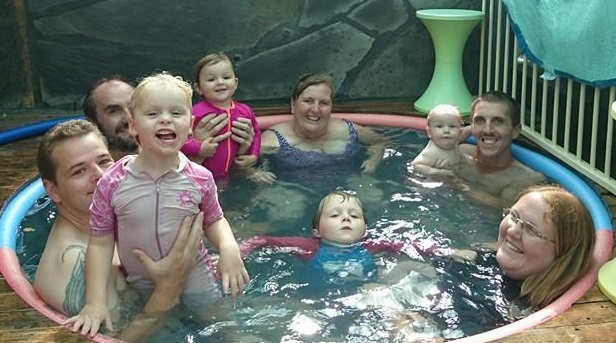
Beverley Paine with her children, and their home educated children, relaxing at home.
Together with the support of my family, my aim is to help parents educate their children in stress-free, nurturing environments. In addition to building and maintaing this website, I continue to create and manage local and national home educating networks, help to organise conferences and camps, as well as write for, edit and produce newsletters, resource directories and magazines. I am an active supporter of national, state, regional and local home education groups.
"You've been an inspiration to me, I love the way
you really listen to people." Vanessa
"Whenever I read your writing I always come away
with increased confidence in my ability to provide and
share a wonderful learning journey with my family!" Davina
"Your guidance, understanding, support and words of
wisdom changed our lives. We now offer support and
organise many homeschooling events for others." Lesley
"Thank you once again for your prompt and friendly service.
I am convinced that your books are going to add
quality and peace of mind to my journey of teaching my kids
at home! Just from studying your website, until almost
2am
in the morning, I 've been encouraged!" Louisa
"Thank you for all your many,many reassuring words
over many, many years. You probably don't know exactly how
valuable you are to the Australian Home Education community.
I've been reading your stuff for maybe 8 years or more now.
And I'm very grateful." Gythaa

CLICK HERE
if you want to learn
how to write your own education plans
to suit
your unique children's
individual learning needs?
Or you are looking for quality curriculum and teaching tips...
|
|
Welcome to the World of Home Education
and Learning without School!
We began educating our children in 1985, when our eldest was five. In truth, we had helped them learn what they need to learn since they were born. I am a passionate advocate of allowing children to learn unhindered by unnecessary stress and competition, meeting developmental needs in ways that suit their individual learning styles and preferences. Ours was a homeschooling, unschooling and natural learning family! There are hundreds of articles on this site to help you build confidence as a home educating family. We hope that your home educating adventure is as satisfying as ours was! Beverley Paine
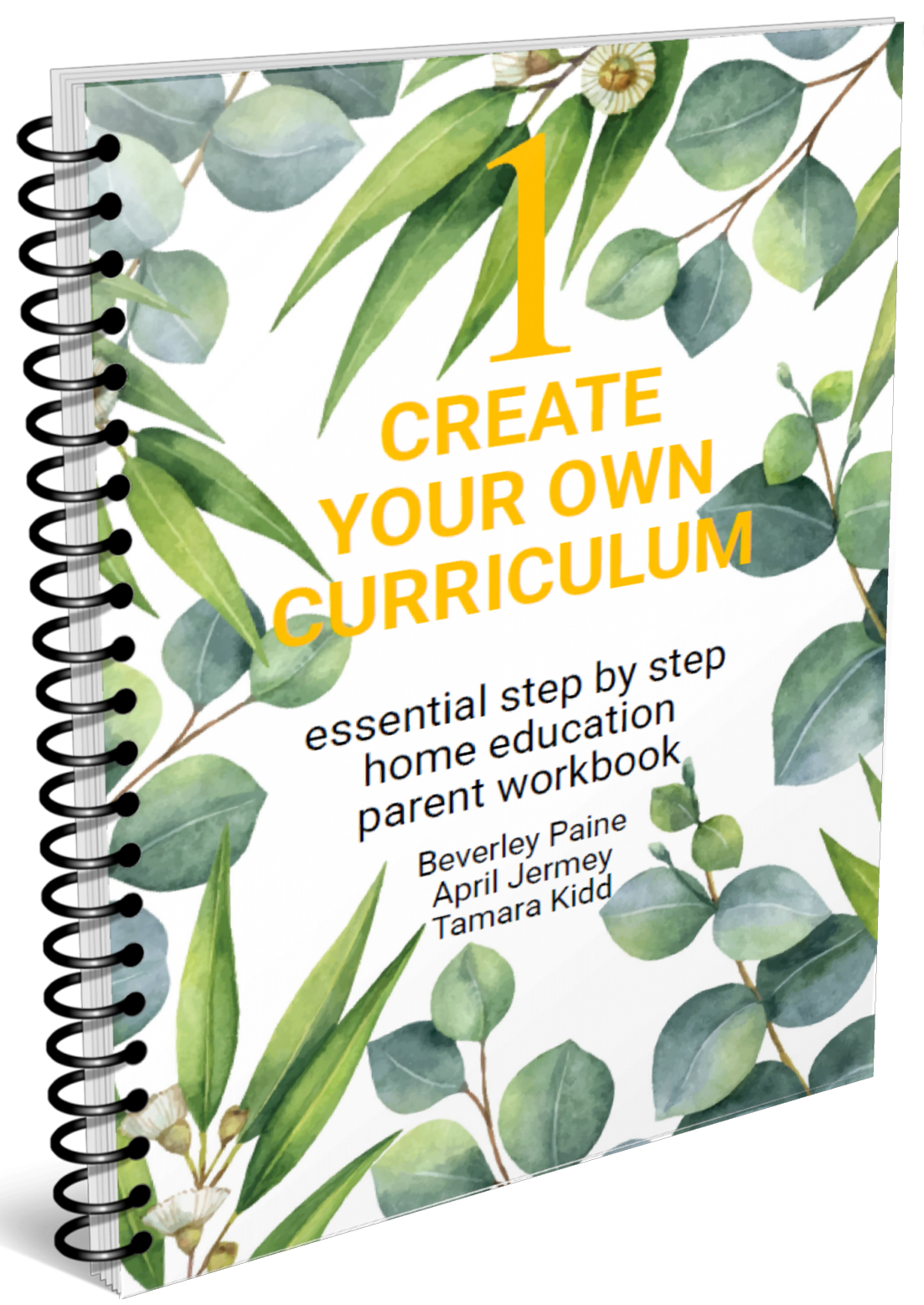
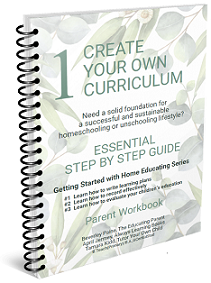
3 ESSENTIAL STEP BY STEP GUIDES
Let experienced home educators Beverley, Tamara and April walk you through HOW to create a learning plan that builds on solid foundations that works for YOUR family AND ticks all the boxes for home educaton registration!
|
Tap into Beverley's
experience
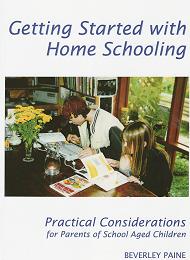
through her books
"Your books, your blogs helped me beyond words... they helped me to find comfort in knowing it is ok to choose exactly what is best for my family." Nisha
"Your books and information are mind blowing and already I am feeling good about this new experience." Diane
"Your guidance, understanding, support & words of wisdom changed our lives." Leslie
"I feel specially inspired by Beverley's words and, the more I read her comments, the more inspired I feel, since my need for support, respect for different parenting styles, and information are fully met." Marijo
|
 |
|

The information on this website is of a general nature only and is not intended as personal or professional advice. This site merges and incorporates 'Homeschool Australia' and 'Unschool Australia'.
The Educating Parent acknowledges the Traditional Aboriginal and Torres Strait Islander Owners, the Custodians of Australia, and pay our respects to Elders past and present and extend that respect to Aboriginal and Torres Strait Islander people viewing this website.
Advertise on this site.





Australia's premier online annual conferences, lifetime access to video and audio recordings, freebies, notes and associated resource guides.
EVERY SUMMIT IS UNIQUE!
$29 each  2023 2023  2022 2021 2022 2021
$25 each 2020 2019 2017
"Biggest and best Aussie homeschool event of the year!"
Home education is a legal alternative
to school education in Australia.
State and Territory governments are responsible
for regulating home education and have different
requirements, however home educating families
are able to develop curriculum and learning programs
to suit the individual needs of their children.

Without revenue from advertising
by educational suppliers and Google Ads
we could not continue to provide information
to home educators. Please support us by letting
our advertisers know that you found them on
The Educating Parent. Thanks!
|
 About
About

 Thank you for visiting!