|
10 Tips for Asking Children Questions
By Beverley Paine
"The true test of intelligence is not how much we know how to do, but how to behave when we don't know what to do." John Holt, How Children Fail
By learning how to ask useful questions parents can aid the children in encouraging creative and imaginative thought, making inferences and connecting concepts. Thoughtful questions can also help children increase awareness and develop critical thinking processes. In this way we help our children explore deeper levels of knowing, thinking and understanding.
Here are 10 techniques you can use to help develop a question asking habit.
- Avoid asking "leading questions." A leading question is phrased in such a way that it suggests its own answer and therefore discourages students from thinking on their own. For example, "Will the tower fall over if you add more blocks to the top?" Instead you could ask, "How heavy are those blocks?" This may lead to a discussion about why adding blocks may result in the tower toppling.
- Follow a "yes-or- no" question with an additional question. Ask your child to explain why she gave a particular answer. You might ask for evidence to support her answer or for more information. For example, if your child answered "Yes" to the above question "Will the tower fall over if you add more blocks to the top?", you could ask, "What makes you think that?" or "How many blocks do you think it would take to make it fall?"
- Do not ask more than one question at once. We often end up doing this because we haven't thought through our questions before opening our mouths to ask them. Our children don't know which question to answer - the first one or the last one?
- Clarify the question's purpose in your head before you ask it . What do you really want to know? This also helps to overcome the problem of asking questions which can be answered with a "yes" or "no" answer. Encourage your children to think about what they want to know before asking questions so that you all ask the 'right' question. This leads to more satisfactory answers!
- Wait for children to think and formulate responses. Allow 5-10 seconds for children to respond before asking again or providing the answer. Some children take longer to process questions than others. If allowed sufficient time on a regular basis, children will often give longer and more complex answers. If your child doesn't respond, don't give the answer, rephrase the question. Chances are it wasn't understood the first time.
- Do not interrupt your child when she is answering a question. Sometimes we are tempted to interrupt. This could be because we think we know what they are going to say, or it sounds as if they are on the wrong track, or perhaps they are struggling to express the answer adequately. Sometimes it is because we are passionate about the subject and want to share our knowledge. Model appropriate listening skills. Hear the full answer and respond appropriately, acknowledging their ideas. This will also allow you to gain a better understanding of what they do and don't know.
- Show that you are interested in their answers, not just if they are right or wrong. Pay close attention when they answer: look at the child's face or eyes, nod, use appropriate facial expressions and body movements.
- Respond in a way that encourages your child to think. Education used to be seen as the passive transfer of information. Discuss right answers as much as you do wrong answers. This will show that learning is more important than getting the answer right all the time.
- Vary the way you ask questions. Although enthusiastic askers of the "why" question, children quickly learn to clam up if asked that question too often. This is largely because, due to inexperience, they rarely get the answer right. Think "who, what, when, where, why and how" to help pose questions.
- Emphasise positive solutions, downplay problems. Encourage creative thinking and innovation by exploring "what if" questions and playful, imaginative answers in your question to find solutions.

Was this article helpful? Was it worth $1.00 to you?
Your gift of $1 or more helps to keep this site operating
offering encouragement
and reassurance to families
wanting
better outcomes for their children.
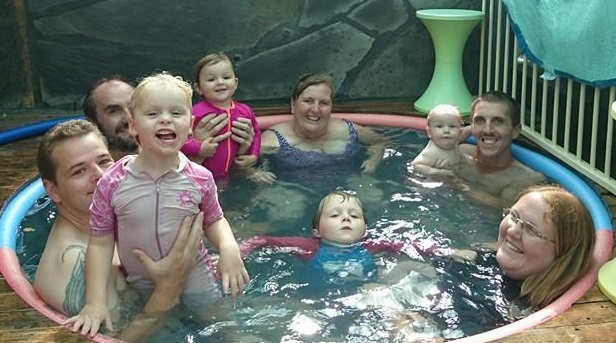
Beverley Paine with her children, and their home educated children, relaxing at home.
Together with the support of my family, my aim is to help parents educate their children in stress-free, nurturing environments. In addition to building and maintaing this website, I continue to create and manage local and national home educating networks, help to organise conferences and camps, as well as write for, edit and produce newsletters, resource directories and magazines. I am an active supporter of national, state, regional and local home education groups.
"You've been an inspiration to me, I love the way
you really listen to people." Vanessa
"Whenever I read your writing I always come away
with increased confidence in my ability to provide and
share a wonderful learning journey with my family!" Davina
"Your guidance, understanding, support and words of
wisdom changed our lives. We now offer support and
organise many homeschooling events for others." Lesley
"Thank you once again for your prompt and friendly service.
I am convinced that your books are going to add
quality and peace of mind to my journey of teaching my kids
at home! Just from studying your website, until almost
2am
in the morning, I 've been encouraged!" Louisa
"Thank you for all your many,many reassuring words
over many, many years. You probably don't know exactly how
valuable you are to the Australian Home Education community.
I've been reading your stuff for maybe 8 years or more now.
And I'm very grateful." Gythaa


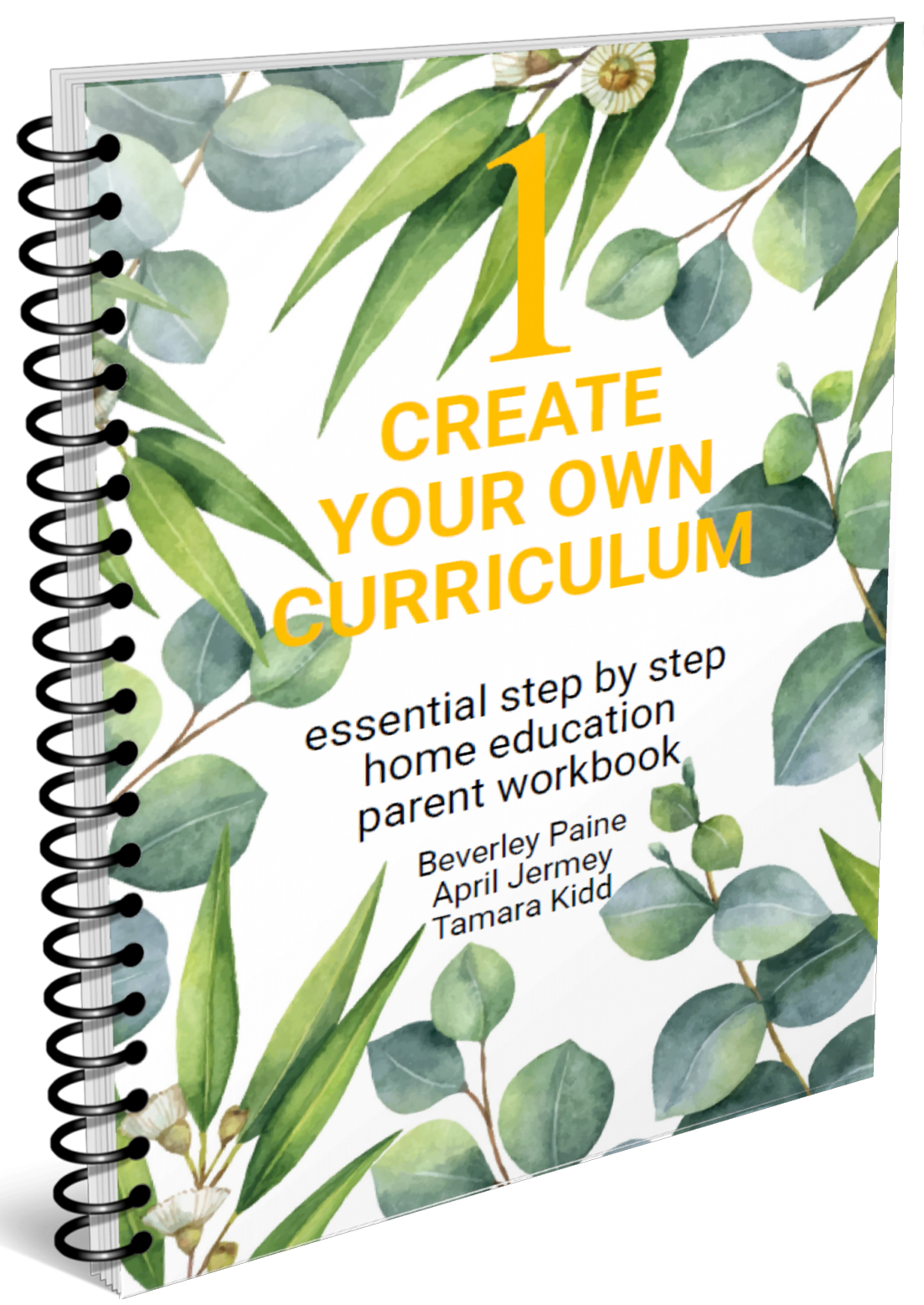
Want to learn how to write your own education plans
to suit your unique children's individual learning needs?
Or you are looking for quality curriculum and teaching tips...
Comprehensive 3 workbook 'how to home ed' course
covering the essential skills you need
successfully home educate your children
|
|
Welcome to the World of Home Education
and Learning without School!
We began educating our children in 1985, when our eldest was five. In truth, we had helped them learn what they need to learn since they were born. I am a passionate advocate of allowing children to learn unhindered by unnecessary stress and competition, meeting developmental needs in ways that suit their individual learning styles and preferences. Ours was a homeschooling, unschooling and natural learning family! There are hundreds of articles on this site to help you build confidence as a home educating family. We hope that your home educating adventure is as satisfying as ours was! Beverley Paine
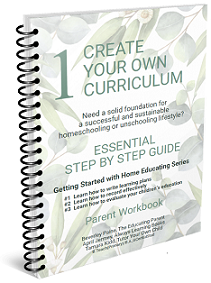
3 ESSENTIAL STEP BY STEP GUIDES
Let experienced home educators Beverley, Tamara and April walk you through HOW to create a learning plan that builds on solid foundations that works for YOUR family AND ticks all the boxes for home educaton registration!
|
Tap into Beverley's
experience
through her books
"Your books, your blogs helped me beyond words... they helped me to find comfort in knowing it is ok to choose exactly what is best for my family." Nisha
"Your books and information are mind blowing and already I am feeling good about this new experience." Diane
"Your guidance, understanding, support & words of wisdom changed our lives." Leslie
"I feel specially inspired by Beverley's words and, the more I read her comments, the more inspired I feel, since my need for support, respect for different parenting styles, and information are fully met." Marijo
|
 |
|

The information on this website is of a general nature only and is not intended as personal or professional advice. This site merges and incorporates 'Homeschool Australia' and 'Unschool Australia'.
The Educating Parent acknowledges the Traditional Aboriginal and Torres Strait Islander Owners, the Custodians of Australia, and pay our respects to Elders past and present and extend that respect to Aboriginal and Torres Strait Islander people viewing this website.
Advertise on this site.



Home education is a legal alternative
to school education in Australia.
State and Territory governments are responsible
for regulating home education and have different
requirements, however home educating families
are able to develop curriculum and learning programs
to suit the individual needs of their children.

Without revenue from advertising
by educational suppliers and Google Ads
we could not continue to provide information
to home educators. Please support us by letting
our advertisers know that you found them on
The Educating Parent. Thanks!
|
 About
About
 Thank you for visiting!