|
Reading Strategies for Non-fiction Texts
by Beverley Paine, 2004
Most people believe that in order to learn to read children must read fiction, and teachers and parents often work hard to teach reading using special books called readers. It is my experience that children generally learn to read by trying to make sense of the plethora of written signs, mainly in the form of advertisements, that adorn their homes and communities. Children encounter non-fiction texts long before storybooks.
In order to negotiate, interact and make sense of the modern world we continually shape spoken and written language into organised patterns known as texts, and that children recognise the importance of reading and understanding these texts from a very early age. To help children make sense of the written word adults need to be sympathetic and alert to their attempts, and to demonstrate an interest in the learning process.
Another important aspect is exposure. Children need to be gradually exposed to the wide variety of texts available, in meaningful contexts, in order to feel confident and competent around them. The first time is always accompanied by some apprehension and confusion, and it is really helpful is someone more knowledgeable is on hand to offer assistance. As all acts involving speaking, listening, reading and writing take place in a social and cultural context and are essentially about communication between human beings then it stands to reason that learning to read should not be solitary event! There is a need for some gentle explicit instruction and scaffolding of skills by way of example.
Over time children need to gain confidence in the use and control of everyday texts such as instructions, invitations, letters, brochures, messages and questionaries, as well as to understand and use text types such as report, discussion, debate, summary and argument. In schools there is much emphasis on creative writing based on the heavy use of fiction as a vehicle for teaching children to read. Creative expression through reading and writing is as highly valued as any expressive art form, but it must be understood that the process of learning to read is grounded primarily in the world of imperative and communicative messages.
From birth children are continually learning language, by continually using it, beginning with non verbal communication, learning to talk and engage in conversation. And as they do so they learn about language, how to use it to communicate their needs and ideas to others. This is a natural process, and in the modern world with the prominence and reliance on the written word for communication, learning to read becomes another natural learning process.
Learning to talk doesn't happen in a vacuum of spoken sound, and it follows that in order for reading to become an accomplished skill children need to be exposed to a rich environment of print which is valued and used by others in a supportive social environment.
There are several elements involved in successful reading. The reader acts as a code breaker, understanding and applying knowledge of the 'technology' of written script, that is, the relationship between spoken sounds and the ways they are represented as written symbols within the language. The reader also becomes a text participant, drawing upon and applying knowledge of the topic, text structure and syntax to make sense of a particular text. He or she becomes a text user, drawing upon knowledge of the role of written texts within society in order to use them to participate in particular social activities in which texts play a central part; and a text analyst, drawing upon his or her awareness that all written texts are crafted objects and can read texts 'critically' with the ability to understand how the texts are 'positioned' to the reader.
Although on one level the act of reading involves the ability to decode written symbols to make appropriate sounds, there is also a much deeper engagement demanded of readers - the capacity to glean real understanding and meaning from texts.
There are several things we can do to help this process along. We can select suitable texts and help children select for themselves, especially ones with language structures and vocabulary that will not overwhelm their current reading competencies. When we do this we can ask some simple questions to guide us:
- Do the texts have sufficient contextual support, explanation or exemplification to assist developing readers in the task of working out unfamiliar words?
- Does the text relate to what the child already knows and builds on that knowledge - new concepts incorporated into existing knowledge structures?
Reading needs to fit into a purpose - reading for meaning and understanding, as well as for pleasure. Reading for pleasure includes both fiction and non-fiction texts. All people write non fiction texts in order to make sense of their experience, to organise their knowledge, to record their thinking and to make links between what they already know and new experiences. Showing children, by example, and including writing in many daily experiences where it is appropriate, is the best and most effective way to assist in the learning process.
Many factors affect the kinds of choices children will make in shaping and understanding the various forms of texts they come across. They need to have a clear knowledge of the purpose of a text, the mode of communication and the field or subject matter. For example, texts can be shaped in order to express ideas and concepts, to direct, instruct, request, describe, explain, entertain, influence, reflect on, argue about, persuade or hypothesise (to mention just a few of the purposes for composing or comprehending texts). By exposing children to a wide variety of forms of text in natural settings we allow them to feel confident with them. Helping them decode and make sense of the text becomes a natural process.
There are many contrived activities home educating parents can use to introduce exposure to forms without the activity becoming a 'lesson'. Below the age of ten children happily engage in role playing games of make believe, and enjoy parents participating (but not taking over), especially as play facilitators, resource provider and play directors. It is easy to help children expand their games of shop, introducing many different shops and props, which include use of non fiction texts - signs, forms, letters, etc. The props can be elaborate or simple depending on age, and can range from home made to actual documents procured from real businesses and services.
A range of activities can set up in social settings - meetings, debates, discussion, clubs - all of these use non fiction texts for meaningful purposes. Parents can help in the setting up and step back, staying in the background, but alert to the children's need for guidance and resources.
Involving the children in the range of reading and writing tasks the parents habitually use is another excellent way to help children learn. Whenever possible I used to ask my children to record lists for me - shopping lists, camping lists, birthday lists, Christmas card lists. Spelling and form didn't matter - the point was always to demonstrate the usefulness of reading and writing as a tool for communicating information and ideas. The emphasis was never on the ability to read, simply that reading is just another way we engage socially with one another, for many purposes. This helped to take away some of the stigma that often accompanies the ability to read, especially in the instance of 'late' reading ability.
Reading for information is a habit that can be fostered by example. I would often ask the children, as their ability grew, to locate information for me. For example, at times, when baking and my hands were covered in flour or butter I'd ask a child to locate a recipe by using the contents or index, to find out a specific amount or ingredient. The child would not be alone - I would be ready to assist or take over if necessary. It is always quicker and easier to do the task myself, but then I wouldn't have been providing a scaffold for learning in a natural way.
Other examples include reading planting instructions when gardening, locating places and street names in road directories when driving, getting telephone numbers, filling out forms at the bank, writing and reading notes and signs, taking telephone messages. It takes practice to involve children in such natural scaffolding processes, and time, but is well worth the effort. It takes less time to do this throughout the day than to sit and work through contrived pages of reading and writing activities.

Was this article helpful? Was it worth $1.00 to you?
Your gift of $1 or more helps to keep this site operating
offering encouragement
and reassurance to families
wanting
better outcomes for their children.
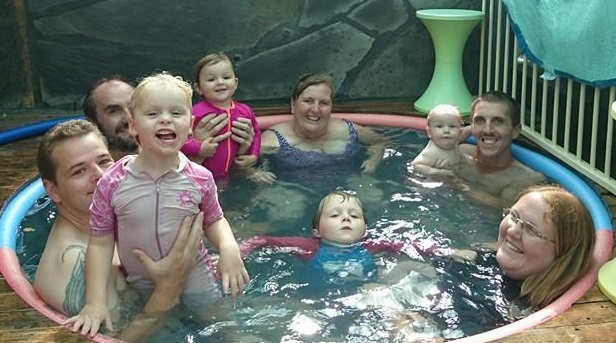
Beverley Paine with her children, and their home educated children, relaxing at home.
Together with the support of my family, my aim is to help parents educate their children in stress-free, nurturing environments. In addition to building and maintaing this website, I continue to create and manage local and national home educating networks, help to organise conferences and camps, as well as write for, edit and produce newsletters, resource directories and magazines. I am an active supporter of national, state, regional and local home education groups.
"You've been an inspiration to me, I love the way
you really listen to people." Vanessa
"Whenever I read your writing I always come away
with increased confidence in my ability to provide and
share a wonderful learning journey with my family!" Davina
"Your guidance, understanding, support and words of
wisdom changed our lives. We now offer support and
organise many homeschooling events for others." Lesley
"Thank you once again for your prompt and friendly service.
I am convinced that your books are going to add
quality and peace of mind to my journey of teaching my kids
at home! Just from studying your website, until almost
2am
in the morning, I 've been encouraged!" Louisa
"Thank you for all your many,many reassuring words
over many, many years. You probably don't know exactly how
valuable you are to the Australian Home Education community.
I've been reading your stuff for maybe 8 years or more now.
And I'm very grateful." Gythaa


Want to learn how to write your own education plans
to suit your unique children's individual learning needs?
Or you are looking for quality curriculum and teaching tips...
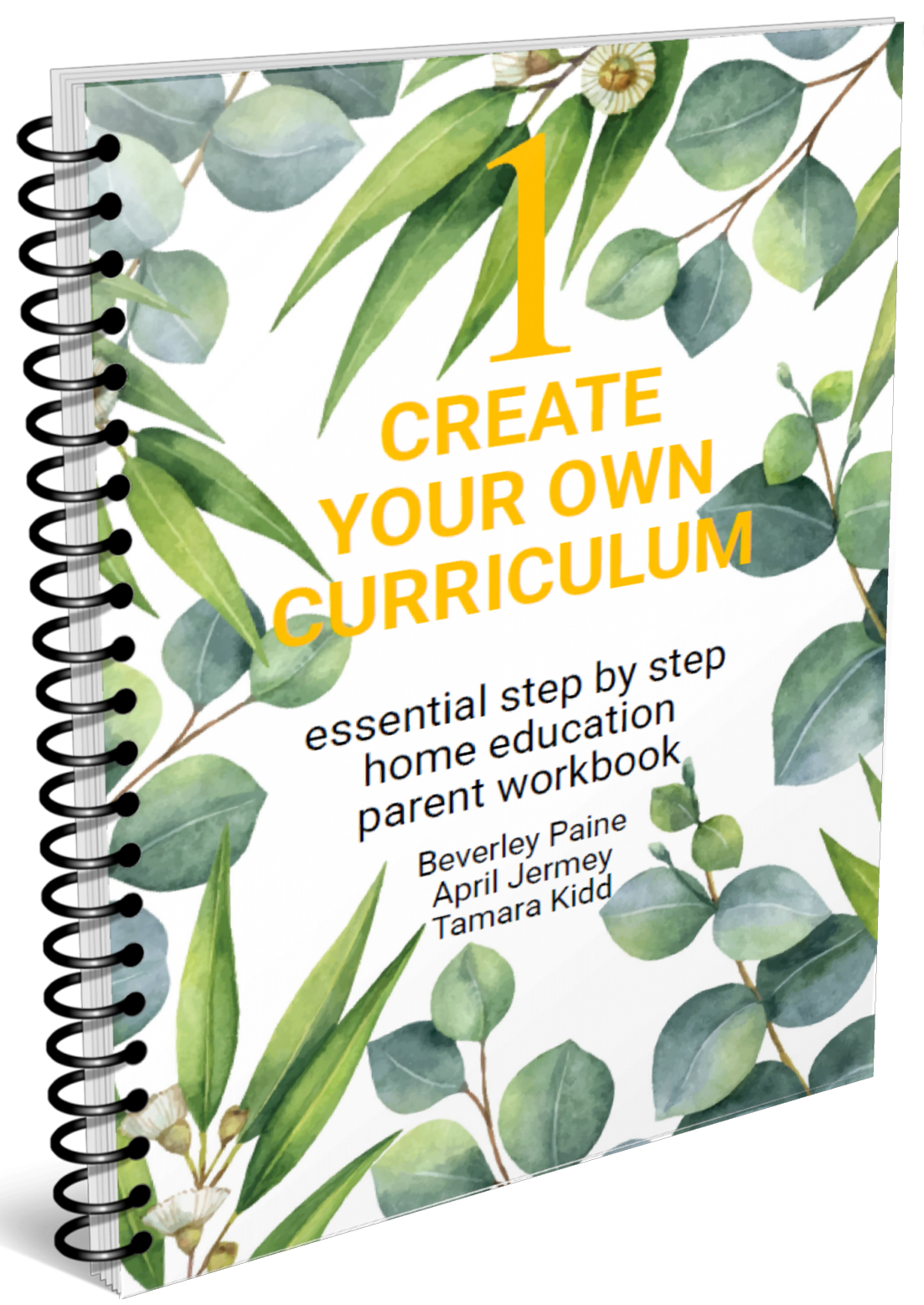
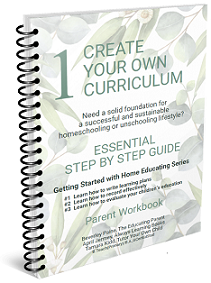
Comprehensive 3 workbook 'how to home ed' course
covering the essential skills you need
successfully home educate your children
|
|
Welcome to the World of Home Education
and Learning without School!
We began educating our children in 1985, when our eldest was five. In truth, we had helped them learn what they need to learn since they were born. I am a passionate advocate of allowing children to learn unhindered by unnecessary stress and competition, meeting developmental needs in ways that suit their individual learning styles and preferences. Ours was a homeschooling, unschooling and natural learning family! There are hundreds of articles on this site to help you build confidence as a home educating family. We hope that your home educating adventure is as satisfying as ours was! Beverley Paine
3 ESSENTIAL STEP BY STEP GUIDES
Let experienced home educators Beverley, Tamara and April walk you through HOW to create a learning plan that builds on solid foundations that works for YOUR family AND ticks all the boxes for home educaton registration!
|
Tap into Beverley's
experience
through her books
"Your books, your blogs helped me beyond words... they helped me to find comfort in knowing it is ok to choose exactly what is best for my family." Nisha
"Your books and information are mind blowing and already I am feeling good about this new experience." Diane
"Your guidance, understanding, support & words of wisdom changed our lives." Leslie
"I feel specially inspired by Beverley's words and, the more I read her comments, the more inspired I feel, since my need for support, respect for different parenting styles, and information are fully met." Marijo
|
 |
|

The information on this website is of a general nature only and is not intended as personal or professional advice. This site merges and incorporates 'Homeschool Australia' and 'Unschool Australia'.
The Educating Parent acknowledges the Traditional Aboriginal and Torres Strait Islander Owners, the Custodians of Australia, and pay our respects to Elders past and present and extend that respect to Aboriginal and Torres Strait Islander people viewing this website.
Advertise on this site.



Home education is a legal alternative
to school education in Australia.
State and Territory governments are responsible
for regulating home education and have different
requirements, however home educating families
are able to develop curriculum and learning programs
to suit the individual needs of their children.

Without revenue from advertising
by educational suppliers and Google Ads
we could not continue to provide information
to home educators. Please support us by letting
our advertisers know that you found them on
The Educating Parent. Thanks!
|
 About
About
 Thank you for visiting!