|
Encouraging our children to be story-tellers and writers
© Beverley Paine
I was asked recently how can can make our children story tellers, or encourage them to write stories, especially when they aren't interesting in writing much at all?
Recognise where your children already tell stories. April scripted all of the play in her early years with her brothers. She'd say exactly what was going to happen in the game, including dialogue. She was the author and director of play! Her brothers went along with it for years. I would listen to Roger telling himself a story as he drew a picture. Or if he was drawing I'd ask what was happening in the picture. I think how we word our questions is crucial to encouraging children to tell their stories and to build their vocabulary. Some children tell stories as they go for walks. Others will talk about factual information only. To them the world is an exciting wonderful place and they don't need fiction to inspire them. For these children we need only talk to them and listen and feed them interesting facts and information, always widening their world. We can also lead them into imagination by asking 'what if' type questions - 'what if the space shuttle couldn't land in the USA and had to land near Adelaide (or wherever you live)? What would it be like to Andy Thomas? What do you reckon you'd do when you got home from a space trip?'
Often I found it much easier, and had a better response, if I didn't ask the child, but began musing aloud: "If I was Andy, up there in the space shuttle, I'd ask them to land the shuttle in Adelaide - at Edinburgh airforce base. Then I could visit my family and let my friends look around the shuttle. That'd be cool.' Naturally, whatever I talked about would have to be topical and of interest to the child. Even now I imagine myself in rally cars, or designing computer games, whatever. The ability to imagine being somewhere else, or someone different, helps to build empathy and understanding.
Anything can turn into an imaginative exploration. See a cockroach scuttling under the cupboard. I immediately recall a great movie about a guy called Joe who moved into an apartment full of talking, singing cockroaches. They help him defeat the developers and win over a girl. The cockroach is now a character in my mind - what story can I tell about him? What story can we weave about him? Did you know that a cockroach can lay millions of eggs? Imagine having that many children? How to feed them all! Maybe we're not telling *stories*, but we're talking, and it's full of the structures you'll find in any work of fiction.
Then there are the 'what if you found a million dollars' story starters, when you're sitting on the swing in the park (I always sat on the swing and took a turn too - so long as there wasn't a sign that said older people were prohibited). Or 'what if leprechauns existed, what if they were really martians?' Often that would be enough to get the kids rambling for hours.
Some children are listeners though. They won't add much to the conversation even when you coax a few words from them. Perhaps they don't think in words, but in pictures. Then I'd settle for their drawings and make sure they always had materials at hand to express their creativity and imagination through art or sculpture, or making, tinkering, modifying or inventing things. We need to quiet achievers. What I would do then is read to them every day. Teach them how to write the necessary things that we all need to do - how to write a resume, different purpose letters, lists, fill out forms, etc. Expose them to reports and charts, articles, essays, and as many forms of writing for different purposes and audiences as you can. When they finally have to write something - say an article - in their teens years, teach them then - using whatever resources you can find (I like university guides to how to write essays, reports, etc). I've found that non-writers (as in people who won't pursue writing in some form as a career) pick up skills easily and quickly when they have a real reason to do so in their adolescence.
The other approach - and one I haven't tried personally - is the Charlotte Mason method of narration. Although more structured than what I did with my children it's similar in that it doesn't push children into writing for the sake of writing for long periods each day. Narration starts gently with only a few minutes each day of retelling (and who doesn't retell the stories in the movies or favourite tv dramas?), and gradually builds up to a complete list of writing and reading skills by the end of schooling. Try a websearch for Charlotte Mason and Narration and you'll turn up a lot of inspiring and encouraging information. We'll be incorporating a lot of the ideas and methods into our natural learning curriculum.
In the meantime, you'll find lots of ideas in my Practical Homeschooling Booklet Series on reading and writing.

Was this article helpful? Was it worth $1.00 to you?
Your gift of $1 or more helps to keep this site operating
offering encouragement
and reassurance to families
wanting
better outcomes for their children.
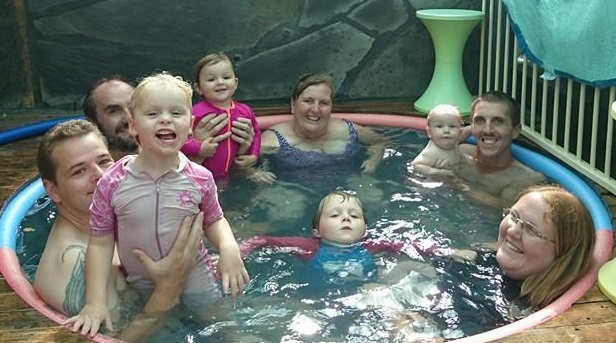
Beverley Paine with her children, and their home educated children, relaxing at home.
Together with the support of my family, my aim is to help parents educate their children in stress-free, nurturing environments. In addition to building and maintaing this website, I continue to create and manage local and national home educating networks, help to organise conferences and camps, as well as write for, edit and produce newsletters, resource directories and magazines. I am an active supporter of national, state, regional and local home education groups.
"You've been an inspiration to me, I love the way
you really listen to people." Vanessa
"Whenever I read your writing I always come away
with increased confidence in my ability to provide and
share a wonderful learning journey with my family!" Davina
"Your guidance, understanding, support and words of
wisdom changed our lives. We now offer support and
organise many homeschooling events for others." Lesley
"Thank you once again for your prompt and friendly service.
I am convinced that your books are going to add
quality and peace of mind to my journey of teaching my kids
at home! Just from studying your website, until almost
2am
in the morning, I 've been encouraged!" Louisa
"Thank you for all your many,many reassuring words
over many, many years. You probably don't know exactly how
valuable you are to the Australian Home Education community.
I've been reading your stuff for maybe 8 years or more now.
And I'm very grateful." Gythaa


Want to learn how to write your own education plans
to suit your unique children's individual learning needs?
Or you are looking for quality curriculum and teaching tips...
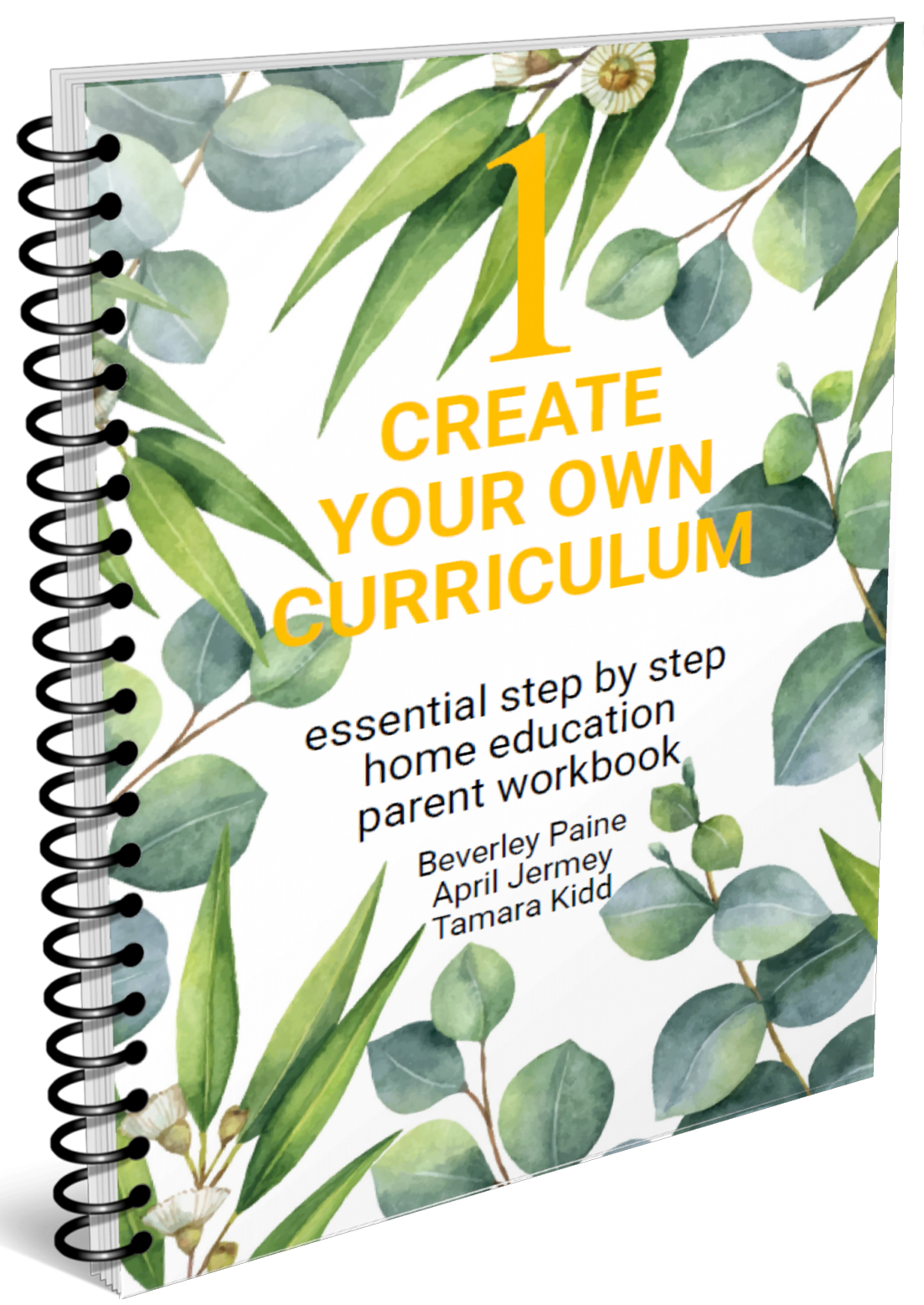
Comprehensive 3 workbook 'how to home ed' course
covering the essential skills you need
successfully home educate your children
|
|
Welcome to the World of Home Education
and Learning without School!
We began educating our children in 1985, when our eldest was five. In truth, we had helped them learn what they need to learn since they were born. I am a passionate advocate of allowing children to learn unhindered by unnecessary stress and competition, meeting developmental needs in ways that suit their individual learning styles and preferences. Ours was a homeschooling, unschooling and natural learning family! There are hundreds of articles on this site to help you build confidence as a home educating family. We hope that your home educating adventure is as satisfying as ours was! Beverley Paine
3 ESSENTIAL STEP BY STEP GUIDES
Let experienced home educators Beverley, Tamara and April walk you through HOW to create a learning plan that builds on solid foundations that works for YOUR family AND ticks all the boxes for home educaton registration!
|
Tap into Beverley's
experience
through her books
"Your books, your blogs helped me beyond words... they helped me to find comfort in knowing it is ok to choose exactly what is best for my family." Nisha
"Your books and information are mind blowing and already I am feeling good about this new experience." Diane
"Your guidance, understanding, support & words of wisdom changed our lives." Leslie
"I feel specially inspired by Beverley's words and, the more I read her comments, the more inspired I feel, since my need for support, respect for different parenting styles, and information are fully met." Marijo
|
 |
|

The information on this website is of a general nature only and is not intended as personal or professional advice. This site merges and incorporates 'Homeschool Australia' and 'Unschool Australia'.
The Educating Parent acknowledges the Traditional Aboriginal and Torres Strait Islander Owners, the Custodians of Australia, and pay our respects to Elders past and present and extend that respect to Aboriginal and Torres Strait Islander people viewing this website.
Advertise on this site.



Home education is a legal alternative
to school education in Australia.
State and Territory governments are responsible
for regulating home education and have different
requirements, however home educating families
are able to develop curriculum and learning programs
to suit the individual needs of their children.

Without revenue from advertising
by educational suppliers and Google Ads
we could not continue to provide information
to home educators. Please support us by letting
our advertisers know that you found them on
The Educating Parent. Thanks!
|
 About
About
 Thank you for visiting!