|
Five In A Row - Guided Literature Based Unit Studies
© reviewed by Beverley Paine
I've never used FIAR but everything I've heard and read looks promising. Because it's widely used and favoured by Christian homeschooling families it was reassuring to find out that Although the content isn't specifically Christian because it is widely used and favoured by Christian homeschooling families is a good indication that the literature selected would be suitable for children of all ages and I imagine of excellent literary quality.
From the FIAR website: "Five in a Row is more than just a set of lesson plans. It's an approach to learning that will forever change how both you, and your children view education, books and teaching."
Five in a Row was created by Jane Claire Lambert, a successful home-school teacher with more than 17 years experience. Five in a Row provides students with a unit-study approach to early education based on outstanding children's literature.
Intended to be easily usable, even for new homeschool mothers, each days activities are carefully laid out. Just bring home one of the 55 books used in Five in a Row from the library and then locate the corresponding lesson plan in your teacher's guide. Read the story aloud each day during the week and use Jane's suggestions and lesson plans to lead your children on a wonderful learning adventure.
You'll teach a different subject each day beginning with social studies on Monday. You'll find history lessons, geography lessons, discussions on foreign culture taken directly from the story you've just read. On Tuesday you'll examine the author's use of language, learning about punctuation, vocabulary, literary devices, creative writing and more. Wednesday you'll discover a comprehensive art curriculum as you explore the illustrator's techniques, style and use of materials with lots of hands-on art lessons for early learners. Thursday your children will explore applied mathematics as they learn about counting, grouping, measurements, simple geometric shapes, etc. Finally, on Friday you'll explore science together with activities to learn more about weather, astronomy, biology, physics, chemistry and more.
It sounds like a brilliant way to begin homeschooling - a really gentle way to ease into learning how to plan and program lessons and learning activities with a rich literature base.
The FIAR website has lesson samples to give an idea of what to expect. The fact that it has been developed by a homeschooling mother gives it extra credence - this means that it's not set out to enable a teacher teach 30 children, but is aimed at small group learning with mixed abilities and developmental levels. Knowing how much work and how long it takes to develop quality learning resources this would be a program I'd seriously consider buying direct from the creator.
For many of us teaching in this way comes naturally, and for those of us that tend to lean towards a learning naturally approach we see the kinds of activities Jane describes and offers spontaneously arising from our children's interests and from what they read and view. What I've found though in my two decades of homeschool networking experience is that many parents don't have much of an idea of how to help their children learn and lean heavily on their own vaguely remembered school experiences from long ago. This usually results in a lot of 'fill-in-the-blank' bookwork sessions. Jane's FIAR lesson plans are full of activities that engage the whole child and will help cover all learning styles.
The essential element of Jane's approach is the unit study. You can find out more about how to plan and implement a unit study approach by doing a search on the internet (google 'homeschool unit studies) or read my Practical Homeschooling Series Booklet Write Your Own Unit Studies. In the booklet I detail how to approach planning unit studies and give some examples, including a literature based unit study (high school level) for my novel.
You can use anything as a basis for unit studies. They simply take the subject further and deeper than might normally occur in natural learning. Your son might be interested in aeroplanes - this could be an ongoing passion of his or a passing interest. My booklet shows how to brainstorm activities in different subject areas or to investigate a variety of related questions. Using subject areas as headings might look something like this:
Borrow Biggles books and read aloud to the children.
English: Plot, characterisation, setting - talk about how the author develops the story, is it realistic, believable, etc. Various literature based activities - eg write alternative endings, act out and extend different scenes from the story (mime or with toys), etc;
Maths and Technology: create a plane and hangar using different media (measurement);
Science: Aerodynamics, paper aeroplanes, how propellors work, borrow book showing 'cut away drawings' of aeroplanes
Social Studies: excursion to airport, flight museums, find out how much it costs and what is involved to become a pilot, WW2, etc
Health: how fit does a pilot have to be, what kind of routines do they need, what safety measures are taken for flight, what has aviation done to improve general ideas about safety, comparison deaths in the air/road, etc
We used unit studies a lot in our homeschooling life. Most of the time they were relatively impromptu unit studies that required very little planning, but sometimes they would stretch over a whole term (eg one we did on South Australian history that was based on weekly excursions with prepatory and follow up activities). Sometimes an interest can develop into a continuing unit study: our daughter's interest in breeding guinea pigs was one such unit study and spanned several years.

Was this article helpful? Was it worth $1.00 to you?
Your gift of $1 or more helps to keep this site operating
offering encouragement
and reassurance to families
wanting
better outcomes for their children.
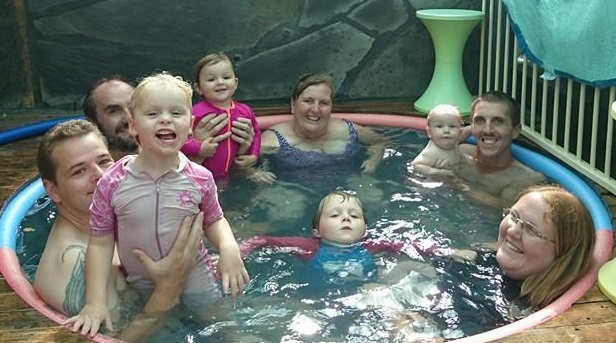
Beverley Paine with her children, and their home educated children, relaxing at home.
Together with the support of my family, my aim is to help parents educate their children in stress-free, nurturing environments. In addition to building and maintaing this website, I continue to create and manage local and national home educating networks, help to organise conferences and camps, as well as write for, edit and produce newsletters, resource directories and magazines. I am an active supporter of national, state, regional and local home education groups.
"You've been an inspiration to me, I love the way
you really listen to people." Vanessa
"Whenever I read your writing I always come away
with increased confidence in my ability to provide and
share a wonderful learning journey with my family!" Davina
"Your guidance, understanding, support and words of
wisdom changed our lives. We now offer support and
organise many homeschooling events for others." Lesley
"Thank you once again for your prompt and friendly service.
I am convinced that your books are going to add
quality and peace of mind to my journey of teaching my kids
at home! Just from studying your website, until almost
2am
in the morning, I 've been encouraged!" Louisa
"Thank you for all your many,many reassuring words
over many, many years. You probably don't know exactly how
valuable you are to the Australian Home Education community.
I've been reading your stuff for maybe 8 years or more now.
And I'm very grateful." Gythaa


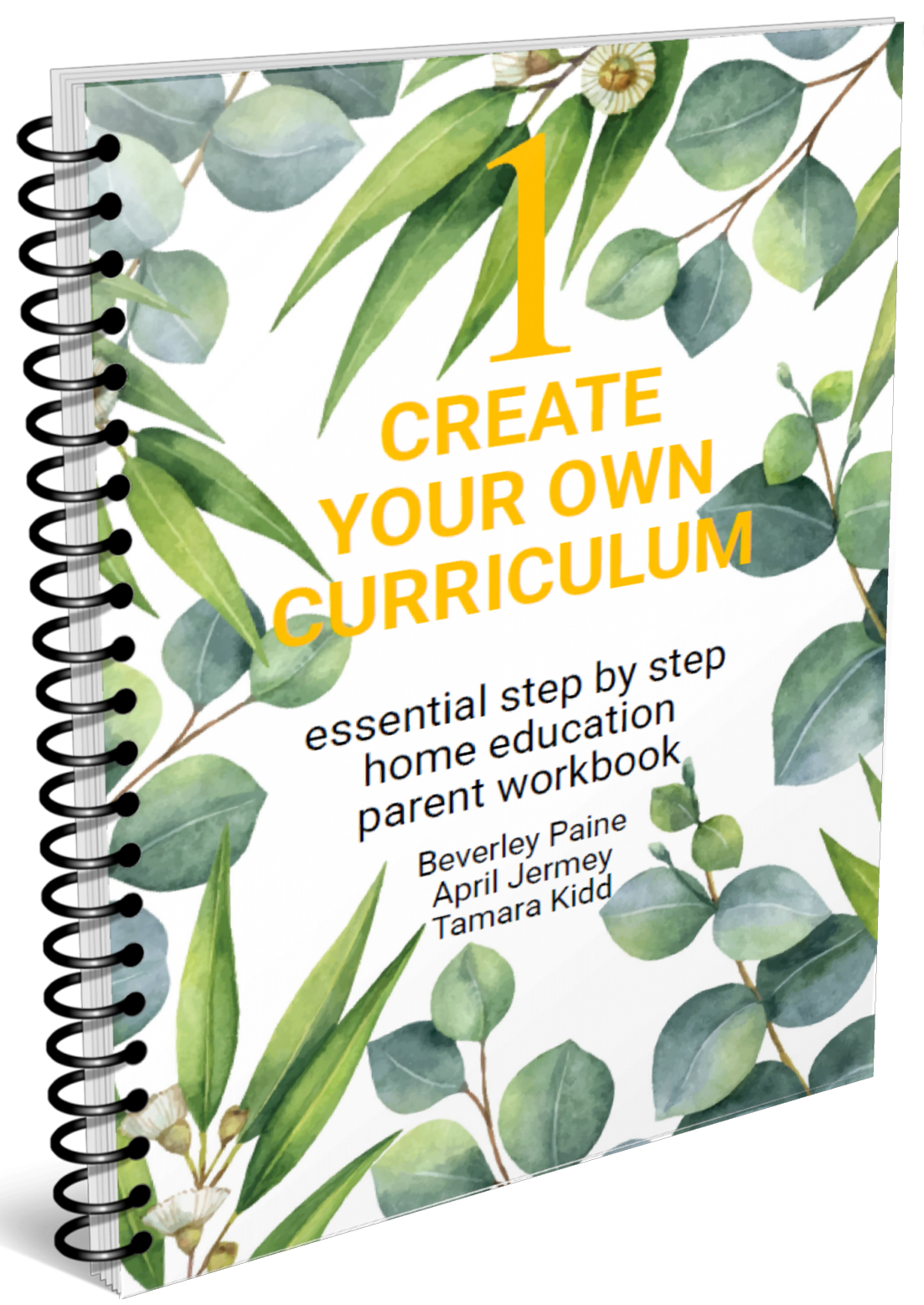
Want to learn how to write your own education plans
to suit your unique children's individual learning needs?
Or you are looking for quality curriculum and teaching tips...
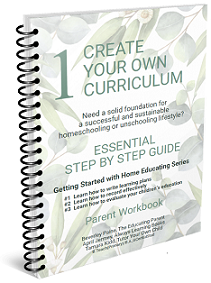
Comprehensive 3 workbook 'how to home ed' course
covering the essential skills you need
successfully home educate your children
|
|
Welcome to the World of Home Education
and Learning without School!
We began educating our children in 1985, when our eldest was five. In truth, we had helped them learn what they need to learn since they were born. I am a passionate advocate of allowing children to learn unhindered by unnecessary stress and competition, meeting developmental needs in ways that suit their individual learning styles and preferences. Ours was a homeschooling, unschooling and natural learning family! There are hundreds of articles on this site to help you build confidence as a home educating family. We hope that your home educating adventure is as satisfying as ours was! Beverley Paine
3 ESSENTIAL STEP BY STEP GUIDES
Let experienced home educators Beverley, Tamara and April walk you through HOW to create a learning plan that builds on solid foundations that works for YOUR family AND ticks all the boxes for home educaton registration!
|
Tap into Beverley's
experience
through her books
"Your books, your blogs helped me beyond words... they helped me to find comfort in knowing it is ok to choose exactly what is best for my family." Nisha
"Your books and information are mind blowing and already I am feeling good about this new experience." Diane
"Your guidance, understanding, support & words of wisdom changed our lives." Leslie
"I feel specially inspired by Beverley's words and, the more I read her comments, the more inspired I feel, since my need for support, respect for different parenting styles, and information are fully met." Marijo
|
 |
|

The information on this website is of a general nature only and is not intended as personal or professional advice. This site merges and incorporates 'Homeschool Australia' and 'Unschool Australia'.
The Educating Parent acknowledges the Traditional Aboriginal and Torres Strait Islander Owners, the Custodians of Australia, and pay our respects to Elders past and present and extend that respect to Aboriginal and Torres Strait Islander people viewing this website.
Advertise on this site.




Home education is a legal alternative
to school education in Australia.
State and Territory governments are responsible
for regulating home education and have different
requirements, however home educating families
are able to develop curriculum and learning programs
to suit the individual needs of their children.

Without revenue from advertising
by educational suppliers and Google Ads
we could not continue to provide information
to home educators. Please support us by letting
our advertisers know that you found them on
The Educating Parent. Thanks!
|
 About
About
 Thank you for visiting!